
What if the flicker is more than a nuisance? Flickering lights when using appliances can happen as a powerful appliance starts, but repeated or widespread flickering may point to an overloaded circuit, a poor connection or another electrical issue. The pattern matters, because some causes need prompt attention.
It’s understandable to wonder whether the problem lies with the appliance, the wiring or the consumer unit. A brief dip affecting one light is different from lights flickering across several rooms, or a problem accompanied by buzzing, a burning smell, sparks or unusual heat. The flicker is a clue, not a diagnosis.
This guide explains what different flicker patterns may indicate, which warning signs need prompt attention and what you can safely do without opening or working on electrical equipment. You’ll also learn what an electrician can investigate, from the affected circuit and connections to the consumer unit, so you can take a sensible next step without guessing.
Table of Contents
What electrical or appliance issues can cause lights to flicker?
Is flickering when an appliance runs normal, or a warning sign?
What should you do when lights flicker during appliance use?
How an Essex electrician can investigate appliance-linked flickering
Why do lights flicker when using appliances?
Appliance-linked flicker is a change in light output that coincides with an appliance being used or switching on. If a washing machine starts and a nearby light briefly dims, the timing is useful to note, but it doesn’t prove the appliance caused a fault. Flickering lights when using appliances can have several explanations, so treat the pattern as a clue rather than a diagnosis.
Some appliances, particularly those with motors, may draw more current as they start. That short-lived demand can affect the voltage reaching lights, making them appear to dip for a moment. A brief change may pass quickly, but repeated, prolonged, widespread or worsening flickering deserves closer attention. Don’t assume a recurring symptom is harmless just because it happens when an appliance starts.
A voltage dip is a temporary change in the electrical pressure supplied to equipment, which can make a light briefly dim. The phrase describes what may be happening, not why. A short dip alone doesn’t identify its source or prove that wiring or an appliance is faulty.
What happens when an appliance switches on?
Motors in equipment such as a vacuum cleaner, washing machine or fridge can need a higher current briefly as they get going. Other types of electrical load can also affect demand when switched on. If the lighting responds at the same moment, it may reflect a temporary voltage change somewhere in the system. Your home’s electrical wiring systems connect circuits and equipment, but timing alone can’t show where a change originates.
A momentary dim that happens once is different from a light that continues to pulse, stays dim or flickers repeatedly. Even if the symptom appears to follow one appliance, don’t conclude that the appliance is at fault. The lighting, circuit, connections or wider supply could also be relevant. Identifying the cause takes more than matching two events.
Why the pattern matters
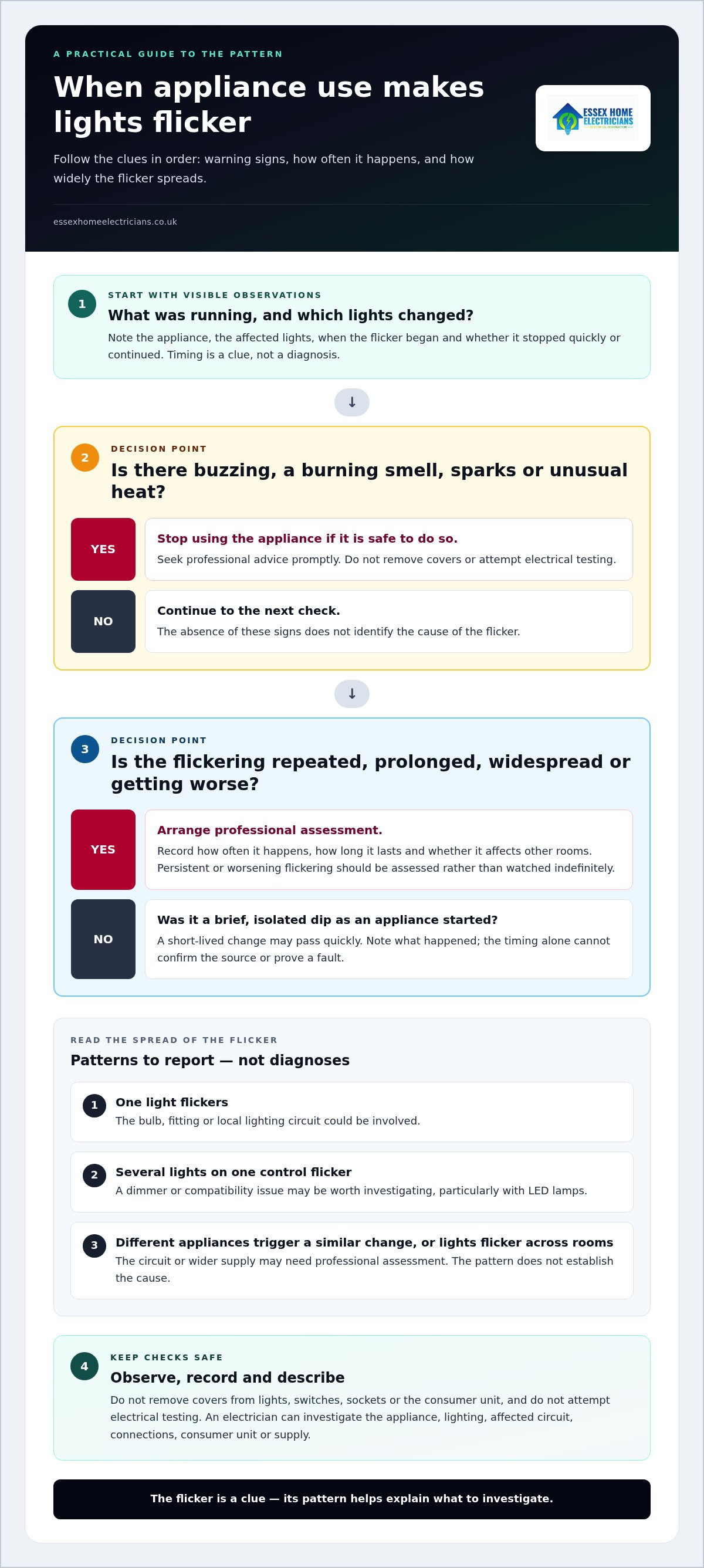
Make a simple note of which appliance was operating, which lights changed and whether the flicker stopped immediately or continued. Record whether it happens every time, only occasionally or increasingly often. These observations help you describe the problem clearly without taking anything apart or testing electrical equipment.
Notice how widely the effect is felt. One flickering light may point to an issue limited to that fitting or its local circuit, whilst lights changing in several rooms at the same time may suggest a wider electrical or supply concern. Neither pattern confirms a cause, but the difference helps an electrician decide what to investigate.
Also note any accompanying signs, such as buzzing, sparks, a burning smell or unusual heat around electrical equipment. If these occur, stop using the appliance if it’s safe to do so and seek professional advice promptly. Persistent or worsening flickering should be assessed rather than watched indefinitely. Duration, frequency, spread and other symptoms all help build a clearer picture.
What electrical or appliance issues can cause lights to flicker?
Flickering lights when using appliances can have more than one possible explanation. A brief change may coincide with an appliance drawing extra current as it starts, but the same visible symptom can also involve a light, its controls, a circuit connection or the wider electricity supply. Timing helps narrow down what to report. It doesn’t confirm the cause.
The same flicker symptom can come from different sources, so its pattern is a clue, not a diagnosis. Consider whether it happens with one appliance or several, and whether the effect is limited to one light or appears in other rooms too.
Appliance load, lighting and circuit clues
A higher electrical demand at start-up may coincide with a short change in brightness. If the flicker appears only when one particular appliance runs, note that association. If several unrelated appliances trigger it, the shared lighting circuit or another part of the electrical system may be relevant. Neither pattern proves which component is responsible.
One light flickers: The bulb, fitting or local lighting circuit could be involved.
Several lights on one control flicker: A dimmer or compatibility issue may be worth investigating, especially with LED lamps.
Different appliances trigger a similar change: The electrical circuit or supply may need professional assessment.
LEDs can make some changes in supply or control more noticeable than other lighting. A lamp that isn’t suited to a particular dimmer may also flicker, but don’t assume compatibility is the answer simply because the light is an LED. Record which lights and appliances are involved, and whether the flicker is brief or continues.
When a connection or supply issue needs attention
A loose or poor electrical connection can’t be confirmed by watching the lights. It needs professional investigation. Flickering across multiple rooms, particularly if it happens with different appliances, is a useful pattern to report to an electrician. It may point to an issue beyond one bulb or fitting, but an inspection is needed to establish what’s happening.
Keep your checks to visible observations. Don’t remove covers from lights, switches, sockets or the consumer unit, and don’t attempt electrical testing. If the flicker is recurring, worsening or accompanied by buzzing, sparks, a burning smell or unusual heat, stop using the affected appliance if it’s safe and seek prompt professional advice.
For persistent or widespread flickering in Essex, an electrician can assess the installation and investigate possible issues with the lighting, circuit, connections, consumer unit or supply. Essex Home Electricians provides electrical services across Basildon, Benfleet, Canvey Island, Rayleigh, Wickford, Billericay, Leigh-on-Sea and Southend. To arrange an assessment, contact Essex Home Electricians with the pattern you’ve observed.
Is flickering when an appliance runs normal, or a warning sign?
A brief dip as an appliance starts may happen when electrical demand changes. That doesn’t prove there’s a fault, but it doesn’t confirm everything is safe either. The sensible response depends on how often the flicker occurs, how many lights are affected and whether anything else seems wrong.
Use this guide to decide what to do next, not to diagnose the cause. No flicker pattern can be declared safe without an appropriate inspection.
Signs that call for prompt electrical advice
Flickering across several rooms may involve more than one lamp or fitting, so note which areas are affected and whether the change happens together. This doesn’t identify the source, but it gives an electrician useful information. A burning smell, unusual heat, buzzing or visible damage should be treated as warning signs, not symptoms to monitor over time.
If an appliance appears damaged or is associated with these signs, stop using it if it’s safe to do so. If someone receives an electric shock, avoid touching equipment that may still be live and seek urgent help. If a circuit trips, don’t keep resetting it to see whether the flickering returns. Arrange professional advice instead.
What a brief, isolated flicker can and cannot tell you
A momentary dip at start-up may relate to a change in electrical demand. If it affects one light and clears quickly, note the details and watch for recurrence. The timing alone can’t rule out a problem with a connection, circuit or wider supply. Nor can it confirm that the appliance is responsible.
Keep a simple record: the appliance in use, the lights affected, how long the flicker lasted and whether it has happened before. Don’t repeatedly run appliances to reproduce the symptom. If flickering lights when using appliances becomes more frequent, lasts longer or spreads to other rooms, arrange an electrician’s assessment.
What should you do when lights flicker during appliance use?
Take a calm, safety-first approach. Don’t try to find the fault by opening electrical equipment or repeatedly switching appliances on and off. First respond to any warning signs. Then note what happened and arrange professional advice if the flickering recurs, worsens or affects several areas.
Stop if there are warning signs. If you notice a burning smell, buzzing, unusual heat, visible damage, sparks or an electric shock, stop using the affected appliance if you can do so safely. Keep clear of anything damaged or hot. If there’s immediate danger, move to safety and contact the appropriate emergency service.
Observe the pattern from a safe distance. Note whether the change affects one lamp, a whole room or lights in several areas. Don’t touch fittings or equipment to investigate.
Record the details. Write down which appliance was operating, when the flickering began, how long it lasted and whether you noticed sounds, smells, heat, visible damage or a circuit interruption.
Seek advice if it returns or spreads. Repeated, prolonged or worsening flickering merits assessment by a qualified electrician, even if it only seems to happen when an appliance starts.
Safe observations to make before asking for help
Clear notes can help an electrician understand what you’ve experienced. For example, record whether a washing machine starting coincided with one lamp dimming, or whether lights in multiple rooms changed at the same time. Note if the flicker stopped quickly or continued, and whether it has happened on other occasions. These are observations, not a diagnosis.
If a circuit trips, include that in your notes. Don’t keep resetting it to reproduce the flicker. A consumer unit’s condition is one possible factor an electrician may consider, but flickering alone doesn’t show that it’s responsible. The fuse box upgrade guide explains why consumer-unit condition can matter without making it the assumed cause of every lighting change.
What not to inspect or attempt yourself
Keep checks to what you can see without touching or dismantling anything. Don’t remove a consumer-unit cover, socket faceplate, switch or appliance casing. Don’t touch exposed conductors, attempt electrical testing or continue using equipment that looks damaged. These steps can expose you to danger and won’t reliably identify the cause.
Even if flickering lights when using appliances appears brief, don’t assume the electrical system is safe based on timing alone. If symptoms recur, affect several rooms or come with warning signs, arrange a qualified electrician’s assessment. For persistent or concerning flickering in Essex, contact Essex Home Electricians to arrange electrical advice.
How an Essex electrician can investigate appliance-linked flickering
Flickering lights when using appliances can have several possible causes, and a homeowner’s observations are a starting point, not a diagnosis. An electrician will ask what happened, then use an appropriate inspection to narrow down whether the issue may involve the appliance, lighting, a circuit, a connection, the consumer unit or the electricity supply. The cause and any work needed can only be established after assessment.
The investigation focuses on the relevant parts of the installation rather than guessing from the timing of the flicker. If the symptom happens when a particular appliance starts, mention it, but don’t assume the appliance is at fault. Essex Home Electricians is a NAPIT-accredited electrical contractor with over 20 years’ experience. Its electricians are qualified and insured.
What information helps narrow down the fault?
Before the visit, share when the flickering occurs, which appliance is running, how often it happens and which rooms or lights are affected. Mention whether the change is brief or continues, and report any buzzing, burning smell, unusual heat, visible damage, electric shock or circuit interruption. These details help frame the investigation, but they don’t confirm what has failed.
An electrician can consider your notes alongside an appropriate inspection of the relevant electrical installation. The symptom might relate to a lighting point, circuit, connection, consumer unit, supply-side issue or appliance, but no particular cause or repair should be assumed before the property is assessed. Don’t open equipment or attempt electrical tests to gather more information.
When to arrange help in Essex
Arrange professional advice if flickering returns, becomes more frequent or affects more lights or rooms. Take warning signs seriously. If there’s an immediate risk, prioritise personal safety and contact the appropriate emergency service. For an electrical concern that needs urgent attention, Essex Home Electricians provides 24-hour emergency call-outs across Essex, with a one-hour emergency response target.
For persistent or concerning flickering, clear notes and a professional assessment can help establish the next step. Essex Home Electricians can investigate domestic electrical issues across Essex, including concerns involving circuits and consumer units. The team serves Basildon, Benfleet, Canvey Island, Rayleigh, Wickford, Billericay, Leigh-on-Sea and Southend. Arrange electrical advice in Essex to discuss the symptoms and arrange an assessment.
Make a safe next move
Use your observations to make the next conversation more useful. A short note of when the flicker happens, which rooms are affected and whether it’s changing over time can help an electrician understand the situation. You don’t need to identify the fault yourself or inspect anything behind a cover. If the flickering is recurring, spreading or accompanied by warning signs, arrange professional advice rather than waiting for it to worsen.
For flickering lights when using appliances, the safest next step is a proper assessment, not repeated testing or guesswork. Essex Home Electricians is a NAPIT-accredited contractor with over 20 years’ experience and fully insured, qualified electricians. Emergency call-outs are available across Essex, with a one-hour response target. Free, no-obligation quotes are also available.
Contact Essex Home Electricians to arrange an electrical assessment and explain what you’ve noticed. Include which appliance was running, which rooms were affected and any warning signs.
Frequently Asked Questions
Is it normal for lights to dim briefly when a large appliance starts?
Yes, a momentary dim can coincide with the extra current some appliances draw as they start, particularly motor-driven equipment. But a single occurrence isn’t a reliable safety check. If you notice it again, record whether it happens with the same appliance and whether other lights change too. That history helps distinguish a one-off event from a recurring pattern, but persistent flickering or other symptoms need professional assessment.
Can a faulty appliance make the lights flicker?
Yes, an appliance fault is one possible explanation, especially if the symptom appears only while that appliance is operating. However, the timing alone can’t establish that it’s at fault. A useful clue is whether the flicker occurs with other appliances as well. If the appliance has a damaged plug or casing, or behaves unusually, stop using it. Don’t open it or try to test its electrical parts yourself.
Why do lights flicker when a washing machine is on spin?
A washing machine’s motor can create changing electrical demand during operation, and the lights may respond at the same time. The spin cycle alone doesn’t identify a fault. Note whether the flicker happens only during spin or at other points, such as when the machine first starts, and whether the machine’s display resets or its operation changes. Those details can help an electrician assess the symptoms without you trying to recreate them.
Can flickering lights damage my electrical appliances?
Flickering alone doesn’t prove that connected appliances are being damaged. Pay attention to how the equipment behaves: a display that repeatedly resets, a device switching off unexpectedly or unusual noises are details worth recording alongside the lighting changes. Don’t keep running equipment to test whether the symptoms return. If an appliance smells hot, looks damaged or behaves abnormally, stop using it if you can do so safely and seek qualified advice.
Should I switch off an appliance if the lights flicker?
If the lights dip briefly and the appliance appears to operate normally, note what happened rather than repeatedly switching it off and on to test the effect. Stop using it if you see damage or notice heat, buzzing, a burning smell, shocks or repeated circuit interruption. Avoid touching exposed parts or disconnecting equipment that appears unsafe. If you’re unsure whether it’s safe to approach, keep clear and seek professional advice.
Can LED lights flicker when the wiring is not faulty?
Yes. An LED lamp or its dimmer controls may react visibly to changes in supply or compatibility, so flickering doesn’t automatically mean the wiring is faulty. It also can’t rule out an electrical issue. Note whether the effect is limited to one LED fitting or occurs with other lights, and whether it coincides with a particular appliance. Avoid swapping fittings or opening switches if flickering continues or spreads.
What should I do if lights brighten as well as flicker when an appliance runs?
Take a change in brightness seriously, particularly if several lights or rooms are affected together. Don’t open the consumer unit or try to measure the electrical supply. If a burning smell, heat, buzzing, visible damage or shocks are present, keep clear and stop using associated equipment if safe. Homeowners in Basildon, Benfleet, Canvey Island, Rayleigh, Wickford, Billericay, Leigh-on-Sea and Southend can contact Essex Home Electricians for local electrical advice about persistent symptoms.