

The best place for a light switch is the spot that works safely with the existing wiring and suits how you use the room. After a renovation or room rearrangement, an awkward switch can make everyday tasks less convenient. An electrician to move a light switch can assess the wall and wiring, then explain the practical options for a new position.
The work may involve rerouting cable and opening part of the wall, but that is not always necessary. Depending on the setup, a wireless switch could offer more flexibility with less wall disruption. The right choice depends on the wall, the wiring and how you want to use the room, not just the switch’s new position.
This guide covers what an electrician will check, how wired and wireless options differ, and what can affect the work and quote. It also explains how to plan a practical location and what to expect from a safe installation. Essex Home Electricians is a NAPIT-accredited local contractor with over 20 years’ experience, serving Basildon, Rayleigh, Wickford, Southend and surrounding areas.
Table of Contents
What an electrician checks before altering light-switch wiring
Wired switch relocation or wireless control: which suits your room?
Choose a qualified Essex electrician to move your light switch
Why move a light switch, and what might the job involve?
A new wardrobe can block a switch. A renovation may add a partition, change a doorway or rearrange the room so the old position no longer works. Sometimes the switch is simply difficult to reach, particularly for someone with limited mobility. An electrician to move a light switch can assess how the proposed position relates to the existing lighting circuit, the wall and the way you use the room.
Relocating a switch changes where you control a light. With a wired switch, the work may involve extending or rerouting cable from the existing connection to the new position. The route depends on what is inside the wall, how the circuit is arranged and whether there is practical access from above, below or the other side. The position also needs to allow the wiring to be installed appropriately.
Consider what the switch needs to operate, not just where it might look neat. Is it for the main ceiling light, a group of lights or a dimmable fitting? The control could be a rocker, dimmer or another format; this overview of types of light switches provides useful general background. The electrician can assess whether the chosen control suits the existing setup.
A relocated wired switch moves the physical control and may need a new cable route; a wireless control changes where you operate the light without moving the original wired connection. Wireless options can avoid some wall work, but suitability depends on the lighting arrangement and equipment. The room and electrical setup, not position alone, determine the right approach.
When does a light switch need relocating?
A new doorway may leave the switch behind the door, while a built-in cupboard or new bed layout can make it difficult to reach. For better accessibility, consider whether someone can approach the switch easily and operate it without stretching or moving around furniture. Note which light it controls and whether you need a simple on/off action or another type of control. These details help identify a practical position.
Does moving a switch always mean chasing the wall?
No. The amount of disruption depends on the cable route, wall construction and access. Where wiring can be run within a suitable cavity, a concealed route may be possible, although making good may still be needed. In some settings, surface-mounted cable and fittings may be a practical alternative. An assessment establishes what is workable in your home; neither approach suits every wall or guarantees a particular finish.
What an electrician checks before altering light-switch wiring
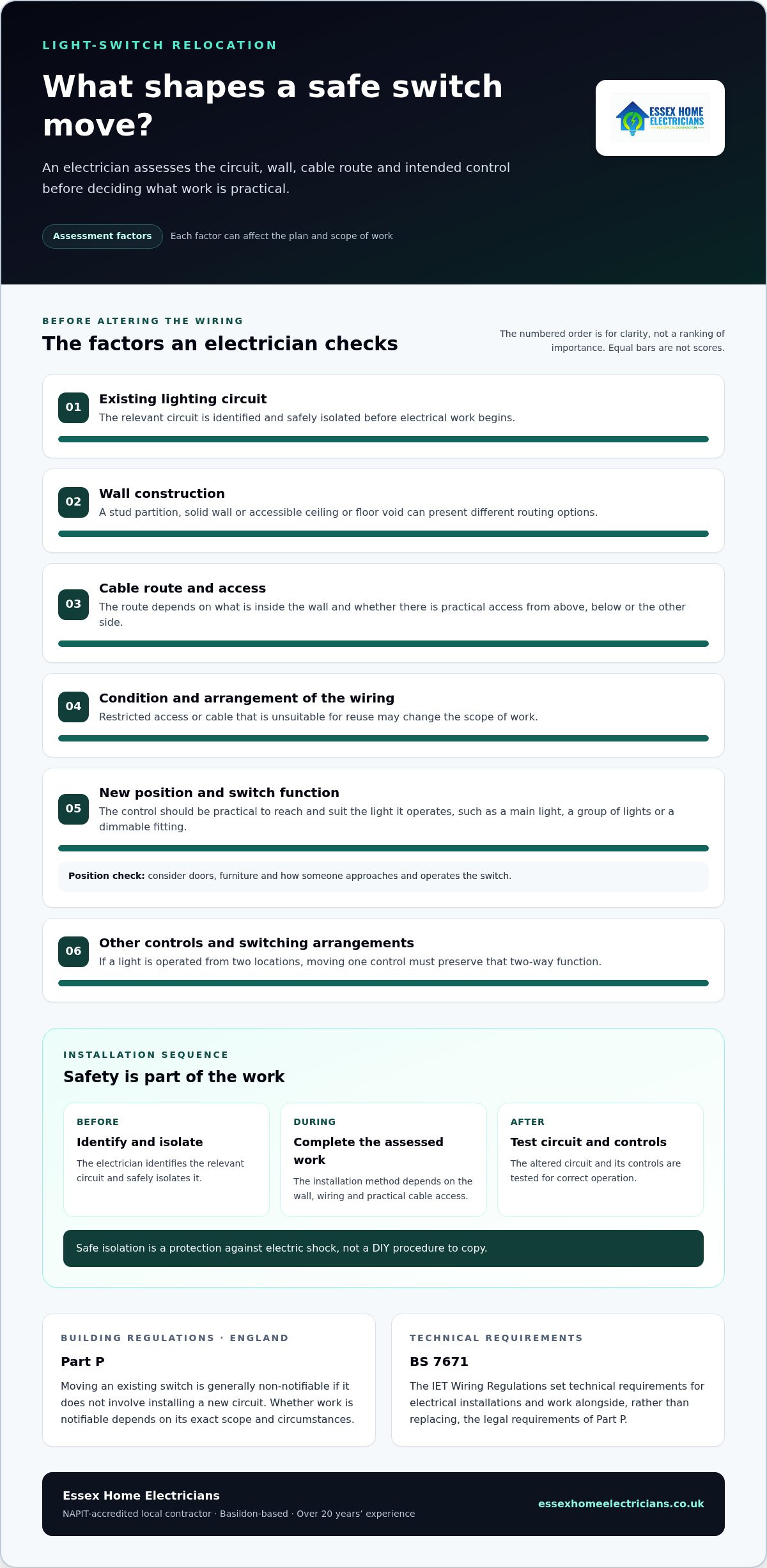
Before changing a switch position, the electrician needs to understand the existing lighting circuit and the proposed work. They identify the relevant circuit and safely isolate it before starting electrical work. This is a key protection against electric shock, not a step to copy as a DIY procedure. Once the work is complete, the altered circuit should be tested and the controls checked for correct operation.
The assessment also considers the route between the existing wiring and the new switch position. A solid wall, a stud partition and an accessible ceiling or floor void each present different options. The electrician checks the wall construction, cable access, the condition and arrangement of the existing wiring, and whether the preferred position is practical. If access is restricted or the cable is unsuitable for reuse, the scope may need to change.
How wiring, wall type and switch function affect the work
A cable may be routed within a stud partition or accessible void, while a solid wall can require a different route or installation method. The electrician also checks what the switch controls. With two-way switching, for example, the same light can be operated from two locations, such as at either end of a hallway. Moving one control must preserve that function. The existing cable condition and circuit layout help determine a safe, workable plan.
The intended position matters as much as the cable route. A switch behind a door or too close to furniture may remain awkward to use. The electrician can consider access, how you use the room and whether other controls need to work alongside it. They can then explain the likely installation method and any wall work before proceeding.
What safety rules apply to switch relocation in England?
Domestic electrical work in England must meet Part P of the Building Regulations. Moving an existing light switch is generally non-notifiable if it does not involve installing a new circuit, but whether work is notifiable depends on its exact scope and circumstances. Notifiable work has specific Building Regulations requirements. The electrician should assess the job rather than assume every switch move falls into the same category.
BS 7671 sets the technical requirements for electrical installations and works alongside, rather than replacing, the legal requirements of Part P. The IET Wiring Regulations BS 7671 provide the relevant professional reference. Safe isolation before work and appropriate testing afterwards help ensure a switch relocation is completed safely and operates as intended. Testing should account for the circuit and its controls, including any two-way switching, rather than simply checking that the light turns on.
An electrician to move a light switch should explain what the assessment finds and how it affects the work. Essex Home Electricians is a Basildon-based, NAPIT-accredited contractor with qualified, insured electricians. To discuss a switch relocation in Basildon or elsewhere across Essex, speak with the local team about your electrical work.
Wired switch relocation or wireless control: which suits your room?
The best option depends on whether you want to move the existing control, add another point of control or avoid extending switch wiring. A wired solution can provide a familiar, permanent control, while wireless control may give you more freedom over placement. The comparison below sets out the practical differences. Compatibility and the wall construction still need to be assessed.
When is moving the existing wired switch the better fit?
Relocation may suit a room where the original switch is inconvenient and you want one familiar control in a more practical, permanent spot. It can be a straightforward option if the circuit and cable route allow it, but the electrician needs to assess the wall and wiring before confirming the approach. If the switch operates a light from more than one position, that arrangement must continue to work as intended.
When might an additional or wireless control make sense?
A second control can help in a long room or where you want to operate the same light from different points. A wireless control may supplement an existing switch or, in some setups, provide another way to control the light. It is not an automatic substitute for rewiring: compatibility depends on the light and control equipment. Changes to fixed wiring must be planned with relevant requirements, including Part P Building Regulations, in mind.
Decide whether you want to replace the current switch or add another control point, and consider how much wall disruption you are comfortable with. An electrician to move a light switch can compare the options with your room and circuit, then explain the scope before work begins. For a switch relocation or control change in Basildon and across Essex, discuss your lighting requirements with Essex Home Electricians.
How to prepare for an electrician to move your light switch
A little preparation helps the electrician understand the problem and assess the proposed change. You do not need to remove a switch or open the wall. Make the room and your plans easy to review, then agree what the work includes before it begins.
Note the issue. Describe what makes the current switch awkward, such as a door covering it or furniture blocking access. Note which light it controls and whether another switch operates the same light. This helps the electrician understand how the controls currently work.
Choose a preferred position. Think about how you enter and move around the room, and whether the switch will still be accessible once furniture is in place. Take a photo of the room and mark your preferred location on the image, or use a removable marker on the wall. Keep the marking clear of fittings and do not disturb the existing switch.
Clear access. Move furniture and other obstructions away from the existing switch, the proposed location and relevant wall areas. Mention anything that cannot be moved, such as fitted units or delicate furnishings. The electrician may also need access to the lighting circuit, so keep the route to relevant electrical equipment clear where possible.
Discuss the scope. Explain whether you want the existing switch moved or are considering an additional control. Share any planned renovation or room changes. The quote depends on the property, intended position and work involved, including cable access, wall construction and any required making good.
What information should you have ready?
Alongside photos and your preferred position, note whether the switch controls one light or several, and whether the light is operated from another location. Mention features that could affect access or the cable route, such as tiled walls, fitted units or restricted parking. If the room is being renovated, explain what is changing and when, so the proposed switch position can be considered in context.
What happens during assessment and installation?
The electrician assesses the existing arrangement, access and proposed position, then discusses the work and agreed scope with you. Electrical work starts with safe isolation. Once the wiring changes are complete, the altered circuit is tested and the controls are checked. Wall repairs, making good and decorating depend on the agreed scope and finish, so clarify what is included before work begins.
Sharing these details gives the electrician a clearer picture of the job and helps shape a quote around your home. Essex Home Electricians provides qualified, insured electrical work across Basildon and surrounding Essex areas. Arrange a light-switch relocation quote based on your preferred position and the work required.
Choose a qualified Essex electrician to move your light switch
Changing a fixed light switch involves your home’s electrical wiring. A qualified, insured electrician can assess the existing circuit and proposed position, carry out the work safely and test the altered installation afterwards. This matters whether you want to move a switch away from a doorway, improve access or accommodate a room renovation. A clear explanation of the work and quote helps you understand what is planned before it starts.
What local experience and accreditation bring to the job
Essex Home Electricians is a Basildon-based, NAPIT-accredited electrical contractor with over 20 years of experience. For a switch relocation, an electrician considers the circuit, cable access, wall construction and requested finish together. These details help shape a practical plan for your property instead of treating every switch move as the same job.
NAPIT accreditation indicates that the contractor belongs to an electrical competent person scheme. It supports confidence in the business’s electrical work, but does not replace the assessment and testing required for an individual project. The electrician still needs to examine the specific circuit and check the altered installation once the work is complete. Qualified and fully insured electricians provide additional reassurance when fixed wiring is involved.
Essex Home Electricians serves Basildon, Wickford, Rayleigh, Southend and surrounding Essex areas. Whether your home has a solid wall or a different layout, the proposed route and switch position need to be considered in the context of the property.
Arrange a quote for light-switch relocation in Essex
A useful quote starts with a clear description of the job. Share where the existing switch is, where you would like it moved and what the light controls. A photograph of the room or a marked preferred position can help explain your plans. Mention renovation work or access constraints too, such as fitted furniture or tiled walls.
The quote can then reflect the property, intended switch position and scope of work. The wiring route, wall finish and whether the job involves moving one control or changing the arrangement can all affect what is involved. Essex Home Electricians provides free, no-obligation quotes, so you can understand the proposed work before deciding how to proceed.
To discuss your switch position, describe the current setup and what you want to change. A qualified local electrician can assess the job and explain the next steps. Contact Essex Home Electricians about your switch relocation.
Plan a switch position that works for years to come
A light switch is a small detail, but its position affects how comfortably you use a room every day. Before settling on a location, picture the room in use: coming in with your hands full, moving around furniture and reaching the light at night. Thinking it through now can help you choose a position that still makes sense if the layout changes.
If you are ready to move ahead, an electrician to move a light switch can help turn your preferred position into a practical plan for your home. Explain what you want to change and where you would like the control, then discuss the approach and scope before work is arranged.
Essex Home Electricians can help homeowners plan switch relocation work across Essex. Arrange a free, no-obligation quote for moving your light switch and take the next step towards a room that works better for you.
Frequently Asked Questions
Can an electrician move a light switch to the other side of a doorway?
Yes, an electrician can move a switch to the other side of a doorway if the wiring route and circuit allow it. The new position should remain easy to reach and not end up behind the open door or an obstruction. In a narrow hallway, consider whether the switch will be accessible as you enter from either direction. The electrician can assess the wall and explain the practical options.
Do I need an electrician to move a light switch?
For a change to fixed wiring, using a qualified electrician is the safe, practical choice. The work involves identifying the right circuit, isolating it safely and checking the altered installation afterwards. Do not remove the switch or attempt to reroute its wiring yourself. Homeowners in Basildon, Benfleet, Canvey Island, Rayleigh, Wickford, Billericay, Leigh-on-Sea and Southend can arrange local electrical work with Essex Home Electricians.
Will moving a light switch damage the wall?
There may be some wall disturbance, but the amount depends on the wiring route and construction. A concealed cable route could require an opening in the wall, while another suitable route may limit the area affected. Surface-mounted wiring can be an option in some situations, though it remains visible. Confirm what making good is included in the agreed scope, as filling and decorating may be separate tasks.
Can I add a second light switch without moving the original?
Yes, it may be possible to add another control point and keep the original switch. For example, a second switch can be useful at the other end of a hallway or near a different entrance to a room. The electrician needs to consider how the light is currently controlled and whether the circuit can support the intended arrangement. Wireless control may also be considered, subject to compatibility with the lighting setup.
How long does it take an electrician to move a light switch?
The time varies with the cable route, wall construction, circuit layout and whether the switch controls a light from another location. A straightforward change with accessible wiring may involve less work than a route through a solid wall or a more complex switching arrangement. The electrician can give a clearer expectation after assessing the property and agreeing the scope. Wall repairs or decorating can add separate work after installation.
Does moving a light switch need Building Regulations approval in England?
Moving an existing switch is generally non-notifiable under Part P if the work does not involve a new circuit. For this specific change, that usually means you do not need to notify local building control. However, the electrical work must still meet applicable safety requirements, including BS 7671. The electrician should consider the exact scope and property, as adding a circuit or changing the work can affect whether notification is required.
Can a light switch be moved without chasing a solid wall?
Possibly. The electrician may be able to use an accessible route, such as a suitable void or an alternative cable path, depending on the room’s construction and wiring. Surface-mounted cable may also avoid chasing into the wall, though it remains visible. If the cable must be concealed in solid masonry, some wall work could be needed. The best route depends on the property, so it needs an on-site assessment.