

Could the trickiest part of fitting a cooker hood be deciding where the air will go, rather than connecting the power? The kitchen layout, hood type and existing wiring can all affect the job. If you need an electrician to fit cooker hood wiring, understanding these details first can help you plan the work and explain what you need.
You may have chosen a hood but still be unsure whether it can use the existing electrical supply. Ventilation is a separate decision: a recirculating hood filters and returns air to the kitchen, while a ducted hood sends air outside. Planning both the electrical connection and ventilation route helps clarify what the installation involves.
This guide explains what an electrician handles, what to consider about ducting and access, and what information to prepare before booking. Essex Home Electricians is a NAPIT-accredited electrical contractor based in Basildon, with over 20 years’ experience serving homes across Essex. We carry out electrical work for cooker hood installations and can help you understand how it fits into a well-planned job.
Table of Contents
What does an electrician do when fitting a cooker hood?
An electrician handles the electrical work needed to connect a cooker hood. The exact work depends on the appliance, its manufacturer’s instructions and the kitchen’s existing electrical setup. The electrician assesses the intended supply and connection point, then determines whether the existing arrangement is suitable or needs changes.
Cooker hood electrical fitting covers the electrical connection needed for the hood to operate, in line with its instructions and the conditions at your property. It is separate from choosing the appliance, altering cupboards or creating a route through an outside wall.
If you’re arranging an electrician to fit cooker hood wiring, share the make and model if you know it. This helps explain the appliance’s connection requirements. The Kitchen Hood Wikipedia overview describes common hood types and components, useful context when distinguishing the appliance’s function from the electrical work.
Which parts of the job are electrical?
The electrician considers where the hood will sit and how it is intended to connect. They assess the existing wiring and proposed connection point against the appliance instructions. A connection that looks close by may still need checking to establish whether it is suitable for the new hood.
Supply and connection: Establish the electrical connection the hood requires and where it will be made.
Existing wiring: Assess the relevant wiring and connection point before deciding whether changes are needed.
Installation details: Use the manufacturer’s instructions and the kitchen layout to plan the electrical work.
The assessment determines the next step. The existing connection may be suitable, or the installation may require electrical changes. Don’t assume either outcome from a photograph or from how the old hood was connected. The electrician can explain the work required after assessing the setup.
What is outside the electrical connection?
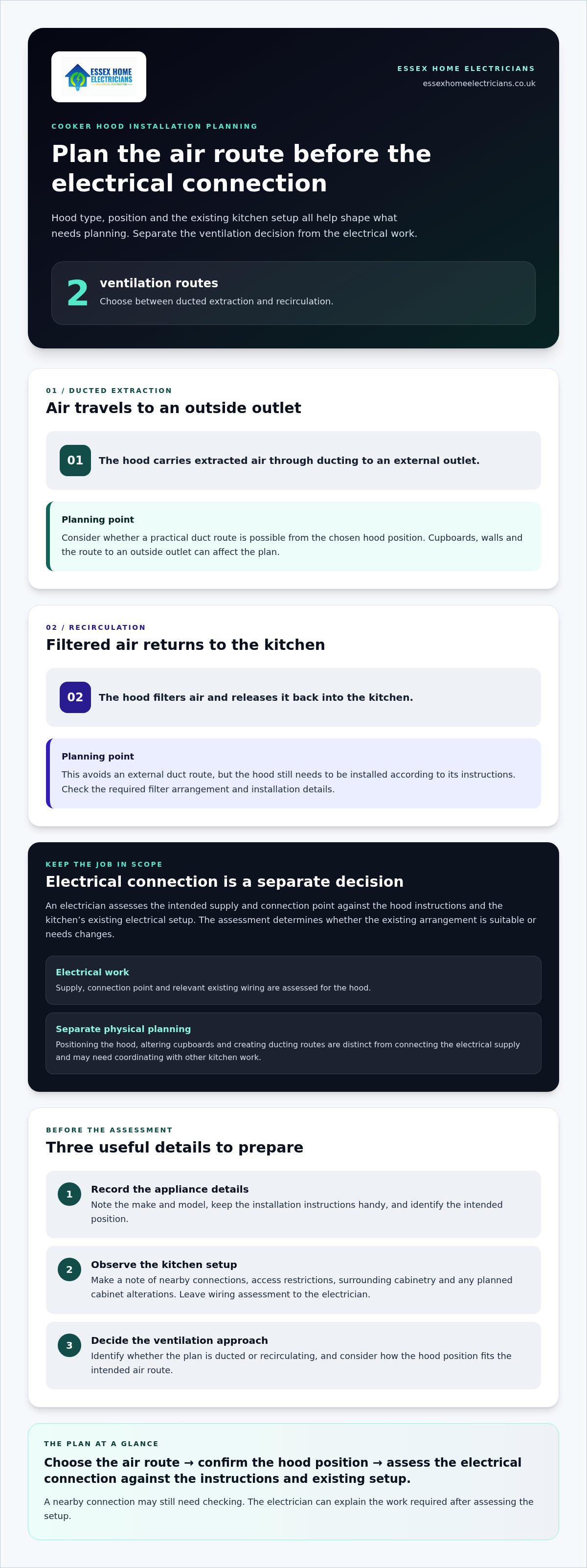
Electrical fitting is separate from deciding how the hood extracts air. A ducted hood sends air through a duct to an external outlet. A recirculating hood filters air and returns it to the kitchen. The ventilation method is an appliance and layout decision, not something determined by the electrical connection.
Physical work may also be needed to position the hood, alter a cabinet or install ducting. These tasks are distinct from connecting the electrical supply and may need coordinating with other kitchen work. Clear plans for the hood position and any cabinet or duct changes help the electrical work fit into the wider installation. Electrical fitting does not include repairing the hood as an appliance.
Choose the right cooker hood setup before arranging electrical work
Decide how the hood will manage cooking fumes before arranging its electrical connection. The choice between ducted extraction and recirculation affects the physical installation. The hood’s position and kitchen layout also determine what needs planning. Hood type and kitchen layout shape the installation plan, including the ventilation route and electrical connection point.
Ducted or recirculating: what is the difference?
A ducted hood carries extracted air outside through ducting. A recirculating hood filters air and releases it back into the kitchen. Neither option suits every layout. A ducted route depends on the property, hood position and route to an external outlet. Recirculation avoids that external route, but the appliance still needs to be installed according to its instructions.
A duct route that looks straightforward on a plan may be affected by cupboards, walls or the hood’s position. Consider the ventilation approach before finalising the location, especially if cabinets or an external wall may need alteration. While domestic installations focus on compact residential ducting, catering environments and food production spaces require dedicated airflow engineering from specialists like Commercial Canopy Fan Pro to handle heavy-duty extraction safely.
What to check about the hood and kitchen
Before booking an electrician to fit cooker hood wiring, note the hood’s make and model, keep its installation instructions handy and identify its intended position. The instructions set out appliance-specific supply and clearance requirements. Use them rather than relying on assumptions based on another hood or an existing installation.
Next, look at the surrounding space. Check that the hood’s dimensions work with the available wall or ceiling area and cabinetry. Note whether there appears to be an electrical connection nearby, but leave assessment of the wiring to the electrician. Access to the work area, nearby obstacles and planned cabinet alterations can all affect how the job is organised.
Record: the hood model, instructions and intended position.
Observe: nearby connections, access restrictions and cabinetry that may change.
Plan: whether the intended ventilation route is ducted or recirculating.
GOV.UK provides UK Electrical Safety Standards guidance for rented homes. It offers context on electrical safety, but does not replace the hood’s installation instructions or an assessment of your kitchen.
Once you have these details, you can describe the setup clearly when arranging electrical work. If you’re planning a hood installation in Essex, discuss the electrical work with Essex Home Electricians and request a free, no-obligation quote.
What can affect cooker hood fitting in an Essex home?
The electrical work depends on the kitchen, not simply on whether a hood is being replaced or installed. Existing wiring, the connection point and the hood’s intended position all matter. A nearby connection may be suitable, but its appearance alone cannot establish that it is appropriate for the new appliance. Nor does every installation need new wiring.
Homes across Essex have different layouts. A hood planned for an outside wall in a Basildon terrace may have different access and ducting considerations from one above an island in an extended kitchen in Benfleet, Canvey Island, Rayleigh, Wickford, Billericay, Leigh-on-Sea or Southend. These are examples, not assumptions about a particular property. Plan the installation around the actual room and appliance.
Existing wiring, access and hood position
Before arranging the work, note where the current connection is and where the new hood is intended to sit. The electrician assesses the existing wiring and proposed position to establish the electrical scope. A visible cable or connection point is useful information, but it cannot show on its own whether the wiring is suitable. That requires assessment at the property.
Access can affect how the work is planned. A connection behind a cupboard, a high ceiling or a tightly fitted kitchen may make the work area less straightforward to reach. Mention any known restrictions when discussing the job so the electrician can take the site conditions into account.
When other kitchen work needs coordinating
Electrical connection, duct routing and cabinet alterations are related parts of an overall hood installation, but they are distinct tasks. A ducted hood may need a route to an external outlet, while moving the hood could affect where that route can run. A cupboard may also need altering to accommodate the appliance. These details can affect planning without automatically changing the electrical work.
Have the hood model and planned kitchen layout ready to discuss. Include intended changes to cabinets, walls or ducting, even if the plans are not final. This gives the electrician a clearer picture of the proposed position and connection point, and helps identify coordination questions early.
Connection: Note the current point and intended hood position.
Access: Flag cupboards, ceiling height or other restrictions near the work area.
Kitchen changes: Mention planned cabinetry alterations and any proposed duct route.
Appliance details: Keep the hood model and installation instructions available.
The Health and Safety Executive’s electrical safety standards guidance provides background on electrical standards. Your installation still depends on the wiring, appliance instructions and conditions at the property.
How to prepare for an electrician fitting a cooker hood
A little preparation makes it easier to explain what you need and helps the electrician understand the kitchen setup. You do not need to diagnose wiring or decide how electrical work should be carried out. Gather the appliance details, note the planned position and mention anything that could affect access.
Information to have ready before booking
If you’ve chosen a hood, have its make and model and manufacturer’s fitting instructions available. Note where it will go and where the existing connection point appears to be. You can also flag planned cabinet or duct changes, restricted access or anything unusual about the wiring. These details help frame the conversation, while the electrician assesses the electrical work against the appliance and site conditions.
Identify the hood. Note the make and model if you’ve selected one. If you haven’t, say that the appliance is still to be decided.
Read the instructions. Keep the manufacturer’s guidance handy, especially details about the electrical supply and installation clearances.
Record the location. Describe where the hood will sit and where the existing electrical connection appears to be. Don’t assume a visible connection is suitable.
Clear access. Consider what is around the work area, such as stored items, cupboards or a planned kitchen refit. Explain any access limits when arranging the work.
Describe the setup. Say whether the hood is intended to be ducted or recirculating, and mention planned cabinet, wall or duct changes.
What to expect from the initial discussion
The first conversation clarifies what electrical work you need and what is already in place. Share your location, whether you’re in Basildon, Benfleet, Canvey Island, Rayleigh, Wickford, Billericay, Leigh-on-Sea, Southend or elsewhere in Essex, along with any known access restrictions or wiring concerns. If the hood or kitchen plans are not final, explain what remains undecided rather than guessing.
The electrician uses the appliance instructions and site details to assess the electrical scope. A quote should reflect the requirements of your installation, rather than assume every hood needs new wiring or that an existing connection can be reused. Essex Home Electricians provides free, no-obligation quotes, so you can discuss the work with the relevant details ready.
Once you’ve gathered the information, arrange a no-obligation conversation about your electrical work. If you need an electrician to fit cooker hood wiring, clear details about the appliance, position and property provide a practical starting point.
Book local cooker hood electrical fitting in Essex
Once you’ve considered the hood, its position and any kitchen constraints, arrange the electrical work. Essex Home Electricians is a Basildon-based, NAPIT-accredited electrical contractor serving homes across Essex. If you need an electrician to fit cooker hood wiring, our team can discuss the work in the context of your property and chosen appliance.
Why use a local electrical contractor?
A cooker hood connects to a home’s electrical system, so use a qualified, insured electrician for the electrical work. Essex Home Electricians is NAPIT-accredited, and its electricians are qualified and fully insured. The work is planned around the appliance instructions and conditions at your home.
Based in Basildon, Essex Home Electricians serves customers in Basildon, Benfleet, Canvey Island, Rayleigh, Wickford, Billericay, Leigh-on-Sea and Southend, as well as other areas across Essex. You can discuss your cooker hood’s electrical needs with a local contractor. Find out more about the company’s local electrical services and the areas it serves.
Essex Home Electricians brings over 20 years’ experience to domestic electrical work. Its qualified, fully insured electricians handle electrical fitting for cooker hood installations, whether you’re replacing a hood or planning a new one. The exact scope depends on the existing setup, intended connection and appliance details. Explain what you know without trying to assess the wiring yourself.
Take the next step with your cooker hood installation
To make the initial conversation more focused, share the hood’s make and model if you’ve chosen one, its planned position and any known kitchen constraints. Mention whether there is an existing connection point, whether access is restricted and if cabinetry or ducting changes are planned. These details help explain the work you need. An electrician can assess the electrical requirements against the appliance and the actual site.
Essex Home Electricians offers free, no-obligation quotes. The quote is based on the electrical work required for your installation, rather than assuming every kitchen or hood needs the same solution. You can discuss the scope before deciding how to proceed.
For a practical next step, contact Essex Home Electricians about your cooker hood installation. Share your location and the details you’ve gathered to discuss the electrical work in your home.
Set your cooker hood installation up for success
A well-planned installation starts with a clear picture of how the hood and kitchen will work together. Before arranging the work, bring the appliance details, intended position and kitchen plans into one place. This gives the electrical assessment a useful starting point and helps keep decisions about the hood, wiring and surrounding work aligned.
If you’re looking for an electrician to fit cooker hood wiring, share what you know and be clear about anything still undecided. You do not need to resolve every detail alone. Discussing the actual setup can help identify what needs attention before the installation moves ahead.
Essex Home Electricians can discuss the electrical work and provide a free, no-obligation quote. Contact Essex Home Electricians to discuss your cooker hood installation and take the next step towards a carefully planned job.
Frequently Asked Questions
Do I need an electrician to fit a cooker hood?
An electrician is the right person for electrical connection work, particularly if fixed wiring needs adding or changing. Physical mounting and ventilation are separate parts of the job, though they may need coordinating. If you’re unsure whether your installation involves electrical changes, an electrician to fit cooker hood wiring can assess the connection and explain the work required. Don’t work on fixed wiring yourself if you’re not qualified to do so.
Can a cooker hood use an existing socket?
Possibly, if the socket and supply suit the chosen hood and its installation instructions. A socket that worked for an older appliance may not be in the right place for a differently sized replacement. Don’t rely on proximity alone to judge suitability. Check the manufacturer’s guidance and have the connection assessed before assuming an existing socket can be used.
Does a cooker hood need its own circuit?
Not necessarily. Whether a dedicated circuit is needed depends on the appliance’s requirements and the existing electrical installation. The hood’s instructions provide relevant connection information, but they do not establish whether the wiring at your property is suitable. An electrician can assess the supply and determine whether it can serve the hood or whether changes are needed.
Can an electrician fit a cooker hood I have already bought?
Yes. You can arrange electrical fitting after buying the hood. Have the make and model, installation instructions and any supplied connection details ready so the electrician can consider the appliance’s requirements. Also share where you intend to position it and whether the kitchen is being altered. This helps distinguish the electrical work from any separate mounting, cabinet or ventilation tasks.
How much does it cost to get an electrician to fit a cooker hood?
The cost depends on the electrical work required at your property, so there is no single figure for every installation. A straightforward connection may have a different scope from work that requires changes to existing wiring or a new supply. Ducting and cabinet alterations are separate considerations. Essex Home Electricians provides free, no-obligation quotes based on the electrical work requested.
How long does cooker hood installation take?
There is no fixed duration for every cooker hood installation. The time involved depends on the electrical connection, access to the work area and whether the job is part of wider kitchen changes. Electrical work may also need coordinating with ducting or cabinetry tasks. Sharing the hood instructions and describing the kitchen beforehand gives the electrician useful context, but the actual scope depends on the property.
Can I replace a cooker hood without changing the wiring?
Sometimes a replacement can use the existing electrical arrangement, but do not assume this just because the old hood was connected there. The new appliance may have different connection requirements, and the existing wiring still needs to be suitable. Compare the new hood’s instructions with the current setup and arrange an assessment if anything differs or is unclear. This establishes whether wiring changes are part of the job.