

Could the biggest electrical issue in a house be the one you can’t see? A property may look well cared for, yet its wiring could be ageing, altered or in need of attention. If you’re weighing up whether to arrange an electrician to check wiring before buying, look beyond appearances. Electrical problems discovered after completion can mean unexpected work and difficult decisions.
A standard homebuyer survey usually gives a visual view of the electrics. It isn’t a substitute for an Electrical Installation Condition Report (EICR), which involves a more focused assessment by a qualified electrician. Neither should be treated as a guarantee about areas that can’t be accessed or inspected. The findings can still help you understand the property’s condition and decide what questions to raise before you commit.
This guide explains what an electrician can check before you buy, what an inspection can and can’t establish, and how findings may shape your next steps, from follow-up checks to planning repairs. You’ll also learn how to arrange an assessment in Essex. Essex Home Electricians is NAPIT-accredited and brings over 20 years of experience to electrical inspections, EICRs and rewiring.
Table of Contents
Why ask an electrician to check wiring before buying a property?
Homebuyer survey or electrician’s wiring check: what is the difference?
Arrange a pre-purchase wiring check with a local Essex electrician
Why ask an electrician to check wiring before buying a property?
Fresh paint, tidy rooms and modern light fittings can make a property feel ready to move into. They can’t show the condition of wiring behind walls, under floors or inside the consumer unit. An electrician to check wiring before buying can give you a clearer picture of the accessible electrical installation and flag concerns that may need further investigation before completion.
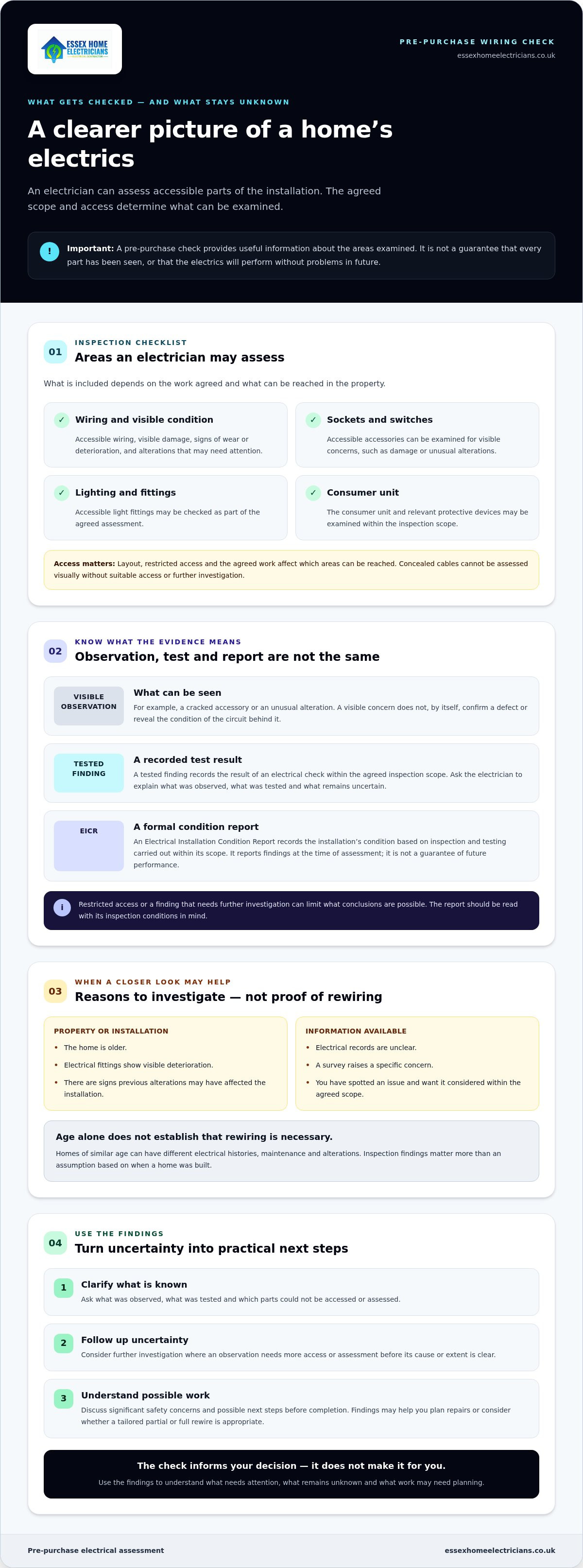
A pre-purchase electrical check assesses the parts of a home’s electrical installation that can be inspected, helping a buyer understand visible concerns and decide what to investigate next. It provides useful information for your decision, not a guarantee that every part of the installation has been seen or that the electrics will perform without problems in future.
What can an electrical check tell a homebuyer?
Depending on the agreed work and access, an electrician may assess accessible wiring, fittings and the consumer unit, and look for visible damage or signs of deterioration. The property’s layout and any areas that can’t be reached affect what can be examined. An EICR provides a formal assessment of the installation’s condition within its inspection scope.
A visible concern doesn’t always confirm a defect. An electrician may, for example, note damage or an unusual alteration that needs further investigation before its cause or extent is clear. Ask what was observed, what remains uncertain and whether additional access or investigation is recommended. This helps you distinguish an initial observation from a confirmed finding.
When is a pre-purchase check especially useful?
A focused assessment can be useful when a home is older, electrical fittings show visible deterioration, or there are signs that previous alterations may have affected the installation. It can also help when electrical records are unclear or a survey raises a specific concern. These are reasons to look more closely, not proof that the wiring needs replacing.
Property age alone doesn’t establish whether rewiring is necessary. Two homes of similar age may have different electrical histories, maintenance and alterations. The inspection findings matter more than an assumption based on when the home was built.
Before arranging a check, note any survey comments and visible issues you’ve spotted. Share them with the electrician so the assessment can address your concerns within the agreed scope. Findings can help you decide whether to:
Seek further investigation into an uncertain observation.
Discuss significant safety concerns and possible next steps before completion.
Plan repairs or consider whether a tailored partial or full rewire may be appropriate.
For a Basildon buyer, a clear assessment turns uncertainty into practical questions. It won’t make the purchase decision for you, but it can help you understand what needs attention, what remains unknown and what work may need planning. That’s a more reliable starting point than judging the electrical installation by appearance alone.
What does an electrician inspect in a home before purchase?
The agreed scope determines what an electrician can assess. A pre-purchase check may include accessible wiring, sockets, switches, lighting and the consumer unit, alongside visible signs of damage or deterioration. It gives you a clearer account of the areas examined and any concerns recorded. It doesn’t mean concealed cables have been fully inspected: access, the property’s layout and the work agreed all affect what can be reached.
Wiring, sockets, lighting, and the consumer unit
An electrician can look for visible damage, signs of wear and alterations that may need attention. They can assess accessible sockets, switches and light fittings, and examine the consumer unit and relevant protective devices—crucial for knowing whether the system can support modern loads. As EV charging suppliers such as EV Cart Australia note, assessing consumer unit capacity and earthing is essential before adding heavy electrical equipment. This helps build a picture of the installation, but a cable hidden behind a wall can’t be assessed visually without suitable access or further investigation.
A visual observation describes what can be seen; a tested finding records the result of an electrical check within the agreed inspection scope. That distinction matters. A cracked accessory, for example, is a visible concern, but it doesn’t by itself establish the condition of the circuit behind it. The electrician records observations and findings, noting where further investigation or remedial attention may be needed. Ask for any uncertainty to be explained in plain English.
What an EICR can and cannot establish
An Electrical Installation Condition Report (EICR) is a formal report on the condition of an electrical installation, based on the inspection and testing carried out within its scope. It records findings at the time of the assessment and can help identify issues requiring attention. It isn’t a guarantee of future performance, nor does it confirm the condition of parts that couldn’t be accessed or assessed.
Read the report with its inspection conditions in mind. Restricted access or an observation requiring further investigation can affect what conclusions are possible. The GOV.UK Electrical Safety Standards in the Private Rented Sector explains inspection requirements for rented properties. Those rules apply to landlords, rather than creating a purchase requirement for owner-occupiers, but they offer useful context on the role of electrical safety inspections.
For more background on how an EICR is used, see our electrical safety inspection information. When preparing for a purchase assessment, share survey notes and access details so the agreed scope can focus on your concerns. Essex Home Electricians carries out electrical safety inspections and EICRs across Essex.
Homebuyer survey or electrician’s wiring check: what is the difference?
A homebuyer survey and an electrical assessment have different purposes. A general survey considers the property as a whole and may note visible electrical concerns, but it isn’t automatically a detailed examination of the wiring. An electrician’s assessment focuses specifically on the electrical installation, with the detail depending on the agreed scope and access. One doesn’t replace the other.
A reassuring survey doesn’t automatically confirm that wiring is in good condition. Equally, an electrician’s report reflects the installation at the time of inspection and within the areas assessed. Neither assessment can guarantee that faults won’t arise later. Treat both as useful evidence, not as a promise about future performance.
Does a homebuyer survey include a full electrical inspection?
Survey scope varies. Electrical comments may be limited to what the surveyor could see, and the report may state restrictions or recommend further checks. Read the actual wording, including any limitations, rather than relying on a brief summary. If it flags an ageing consumer unit, damaged fitting or unclear records, a separate electrical assessment can investigate that concern more directly.
When might an EICR be the more useful next step?
An Electrical Installation Condition Report (EICR) provides a structured view of an installation’s condition, based on inspection and testing within its scope. It may be appropriate if a survey identifies a concern, the electrical history is unclear or you need more detail before deciding what to do. Survey comments can help focus the electrician’s attention, but they don’t replace the assessment itself.
For example, a survey might mention that wiring appears dated or that access to parts of the installation was restricted. Those observations are prompts for clarification, not a diagnosis or proof that a full rewire is required. An EICR can help establish whether further investigation or remedial work should be considered. If substantial work is raised, the next discussion can explore whether targeted repairs, partial rewiring or a full rewire is appropriate for the property.
Use the two reports together. Check what the survey says, note any limitations, then compare its electrical observations with the electrician’s findings. This gives you a grounded basis for follow-up questions and purchase discussions. If you’re looking for an electrician to check wiring before buying, a focused assessment can turn a broad survey concern into clearer information about the installation and possible next steps.
How to use survey findings before you commit to buying
A report is most useful when you turn it into clear questions and priorities. Avoid treating every observation as equally serious or making assumptions based on a short survey comment. Work through the findings, then use the electrician’s explanations to inform your discussions about the property before you commit.
Review the wording. Note each electrical observation, recommendation and stated limitation. Separate what was directly observed from what needs further investigation.
Clarify priority. Ask which findings relate to safety or need prompt attention, which are recommended improvements, and which can be considered as part of longer-term plans.
Discuss practical options. Use the clarified findings to consider further access, additional assessment, repair work or how the issue may affect your purchase arrangements.
This sequence keeps the conversation grounded in evidence. A concern that needs further investigation isn’t automatically proof of a major defect, while a reassuring general comment shouldn’t be treated as confirmation that every electrical component has been assessed.
Questions to resolve after receiving the findings
Ask what each observation means, why it was recorded and whether it needs attention before you proceed. If an area couldn’t be accessed, find out what further access or checks could help clarify its condition. Keep the survey and electrical report together, with your notes, so you can refer to the same findings during discussions.
Group priorities in practical terms:
Safety concerns: clarify the recommended response and whether further investigation is needed before completion.
Recommended improvements: understand the work involved and whether it can be planned after purchase.
Longer-term planning: note upgrades that may be useful but aren’t identified as immediate concerns.
From electrical findings to a repair or rewiring plan
The right work depends on the findings, not simply the property’s age. It may involve a targeted repair, a partial rewire or, where the assessment supports it, a full rewire. A clear explanation of the affected areas helps you understand the likely scope and discuss what should happen before or after completion. Ensuring the infrastructure is safe also creates a dependable foundation if you plan to introduce renewable upgrades later, a priority often highlighted by solar specialists such as Bright Earth Solar when assessing domestic systems.
If substantial work is raised, ask what evidence supports the recommendation and whether further investigation would refine the scope. This can help distinguish a specific fault from broader work that may be worth planning. Essex Home Electricians provides electrical inspections, EICRs and rewiring across Essex. The company is NAPIT-accredited and has over 20 years of experience.
For a Basildon purchase, sharing the survey notes and any access constraints can help focus an electrical assessment on the questions that matter to you. If you’re considering an electrician to check wiring before buying, you can discuss an electrical inspection and the next steps for understanding the findings.
Arrange a pre-purchase wiring check with a local Essex electrician
Once you know which electrical questions need answering, gather the information that will help plan an assessment. A clear brief makes it easier to explain your concerns and agree what the inspection should cover. It also gives the electrician useful context when discussing any recommendations.
What information helps plan the inspection?
Have the property address ready, along with any survey comments, electrical records and concerns you’ve noticed. Mention specific observations, such as damaged fittings or an alteration whose history is unclear. Explain what access is available, including any rooms or areas that may be difficult to reach. This helps shape the agreed scope and clarify which parts of the installation can be assessed.
Before the inspection, organise:
The property address and any relevant access arrangements.
Survey notes that refer to electrical condition or recommend further checks.
Your own concerns and any electrical documents supplied with the property.
Questions you want answered about the assessment findings or possible next steps.
Recommendations should reflect the property and the findings, not a standard assumption about what an older home needs. If an area can’t be accessed or an observation needs more investigation, that limitation should inform what can reasonably be concluded. Keep the survey and electrical documents together so you can refer to them as you consider your options.
How a local electrician can help with next steps
Essex Home Electricians is a Basildon-based, NAPIT-accredited electrical contractor with over 20 years’ experience. The business carries out electrical safety inspections and EICRs for homebuyers across Basildon, Benfleet, Canvey Island, Rayleigh, Wickford, Billericay, Leigh-on-Sea and Southend. The findings can also help shape a suitable plan if repairs or rewiring are recommended.
The work needed depends on what the assessment establishes. It may involve addressing a specific issue, considering partial rewiring or planning a full rewire. A recommendation should be explained in relation to the installation, so you can understand the proposed scope rather than assume a particular outcome before the assessment. Free, no-obligation quotes are available for proposed electrical work.
If you’re arranging an electrician to check wiring before buying, sharing the survey notes and access details helps start the conversation with the right context. Arrange a no-obligation discussion about a pre-purchase electrical assessment and the questions you need answered.
Make your next step a confident one
Before exchange, give yourself room to resolve questions that could affect your plans for the property. A focused discussion with an electrician to check wiring before buying can help you decide what information you still need, what work may need planning and which points to raise in your purchase discussions.
Keep your survey notes and electrical findings together. You can then refer to the same details as you consider the property, discuss follow-up checks or plan work after moving in. The aim isn’t to remove every uncertainty, but to make your next decision with a clearer view of the electrical questions that matter to you.
Essex Home Electricians can discuss a pre-purchase wiring check and provide a free, no-obligation quote for proposed electrical work. Arrange a no-obligation discussion about a pre-purchase wiring check, then move forward with a clearer plan for your potential new home.
Frequently Asked Questions
Should I get an electrician to check wiring before buying a house?
Yes, especially if the property has unclear electrical records, visible damage or survey comments that need a specialist’s view. An assessment can help identify questions to resolve before you commit, such as whether further investigation or repairs may be needed. It won’t remove every uncertainty, but it can give you more useful information than relying on appearances or a general survey alone.
Is an electrical check the same as an EICR?
Not necessarily. “Electrical check” can describe a range of work, while an Electrical Installation Condition Report (EICR) is a formal report based on inspection and testing within an agreed scope. Before arranging an assessment, be clear about what you need: a general safety check or a formal condition report. The report’s scope and any access restrictions affect what its findings can establish.
Can a homebuyer survey confirm that a property’s wiring is safe?
No. A survey may describe visible electrical features or note concerns, but it shouldn’t be treated as confirmation that the installation has been fully inspected and tested. For instance, a surveyor may spot an old-looking consumer unit without being able to establish the condition of every circuit. If you need a clearer electrical assessment, arrange a specialist inspection and read its findings alongside the survey.
How long does a pre-purchase electrical inspection take?
There isn’t one reliable duration for every property. The time needed depends on factors such as the home’s size and layout, the inspection scope and how easily the relevant areas can be accessed. A compact flat and a larger house with limited access may require different amounts of time. When arranging the visit, share the property details and any known access restrictions so the assessment can be planned appropriately.
Can I ask for an electrical inspection before exchange of contracts?
Yes, you can request an inspection before exchange, but access needs to be arranged with the seller or their representative. Raise the request early in the buying process and explain that you want an electrical assessment, so arrangements can be discussed before your decision deadline. If access is limited, find out which areas can be inspected and whether that affects the conclusions or prompts follow-up checks.
What should I do if an electrician finds problems with the wiring?
First, ask the electrician to explain the findings, their priority and whether further investigation is needed. Then consider the possible work and timing before deciding how to discuss the issue as part of your purchase. A finding doesn’t automatically mean the whole house needs rewiring. Buyers in Basildon, Benfleet, Canvey Island, Rayleigh, Wickford, Billericay, Leigh-on-Sea and Southend can use the assessment to plan informed next steps.