

The cheapest fan can become an expensive mistake if it doesn’t clear moisture properly or its wiring and installation aren’t suitable for your bathroom. Choosing an electrician to install bathroom fan equipment safely means looking beyond the unit itself: the fan type, ventilation route and electrical requirements all matter.
It can be hard to know whether you need a straightforward replacement, a new duct route or different controls, especially if the wiring is old or access is awkward. This guide explains what an installation may involve, what an electrician should assess and what to ask before agreeing the work. You’ll also find practical ways to compare fan options and check that the proposed airflow and electrical arrangements suit your bathroom.
For homeowners in Essex, Essex Home Electricians is a NAPIT-accredited electrical contractor based in Basildon, with over 20 years of experience. Bathroom fan installation isn’t listed as a service, so check availability, the job scope and any relevant certification arrangements before booking. The aim is to choose for safe, effective ventilation, not just the fan price.
Table of Contents
Why hire an electrician to install a bathroom fan?
A fan can suit the room but still fail to solve the problem if its electrical connection isn’t safe or the extracted air has nowhere effective to go. An electrician can assess both parts of the job before work starts, including the existing circuit, the proposed fan position and whether the duct route needs planning.
An electrician’s role is to assess and complete the agreed electrical work safely, then explain what’s needed for the fan to ventilate the bathroom effectively. That doesn’t automatically mean they’ll supply the fan or carry out every part of the ventilation work. Agree who chooses and provides the unit, controls, ducting and external outlet, and whether making good is included. A basic overview of how an extractor fan moves air can help, but the right arrangement depends on the bathroom and its route to the outside.
What does a bathroom fan electrician assess?
An electrician should consider the existing circuit and protective devices, the proposed fan position, available controls and access for installation. The location matters because equipment must be suitable for where it will be fitted and the conditions around it.
The duct route and external outlet also shape the ventilation plan. A short, direct route presents different practical considerations from a longer route with bends or limited access. Ask what the electrician has checked and which parts of the work are included. In particular, confirm whether the quote covers electrical connections only or also the fan, controls, ducting and outlet.
When should you avoid fitting a fan yourself?
Bathroom electrical work requires careful attention to the fan’s location, the circuit and the safety requirements for the specific installation. If you’re unsure about the wiring, protective devices or suitability of the existing circuit, stop and ask a qualified electrician to assess it. Don’t rely on matching wire colours or simply replacing an old unit to establish that the connection is safe.
Notification and certification requirements can depend on the exact work and circumstances, so don’t assume every fan installation follows the same process. Ask the electrician what applies, which checks will be completed and what records you’ll receive. If you’re considering an electrician to install bathroom fan equipment, clarify the scope and responsibilities before booking. For a local contractor such as Essex Home Electricians, confirm that bathroom fan installation is currently available and agree the job details before proceeding.
Which bathroom fan and controls should your electrician install?
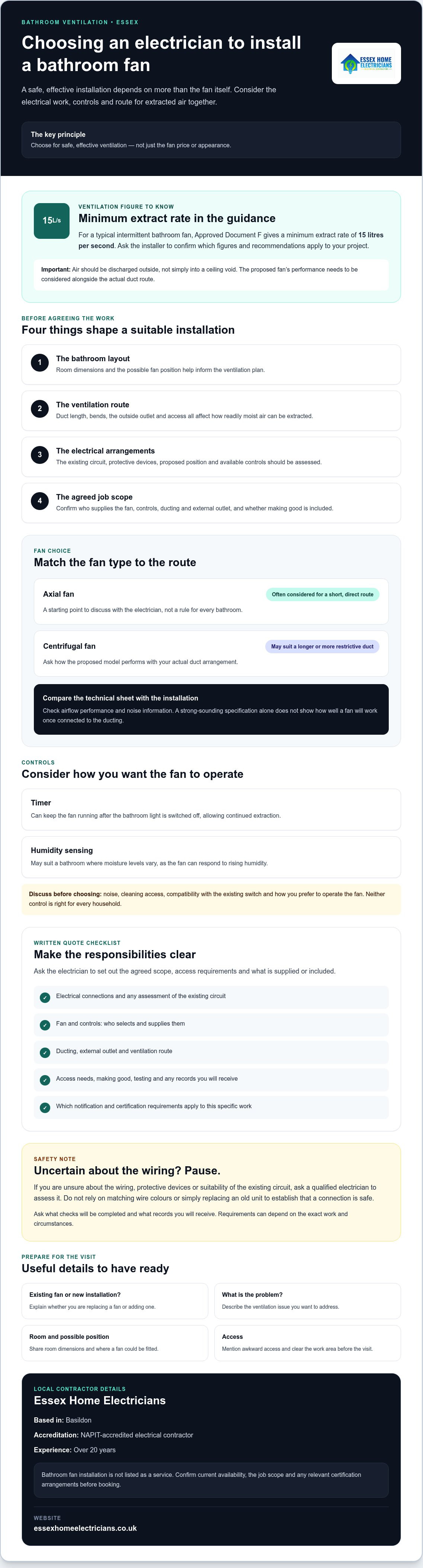
The right fan depends on more than the room’s size. Its position, the duct route, bends and the outside outlet all affect how readily moist air can be extracted. An axial fan is often considered for a short, direct route; a centrifugal fan may be better suited to a longer or more restrictive duct. These are starting points, not rules. Ask the electrician to compare the proposed fan’s performance with your actual layout.
Check the manufacturer’s technical sheet for airflow performance and noise information, then ask how those figures relate to your duct arrangement. Extraction rate is the volume of air a fan can move in a given time. For a typical intermittent bathroom fan, Approved Document F gives a minimum extract rate of 15 litres per second. The Building Regulations for ventilation provide official guidance; the installer should confirm which figures and recommendations apply to your project. Air should be discharged outside, not simply into a ceiling void.
How do you choose a fan for the bathroom layout?
Share the room dimensions and explain where a fan could be fitted. The electrician can assess the duct length, bends, outlet position and access, then explain whether the proposed fan can deliver suitable airflow through that route. Ask them to check the selected model’s performance against current guidance and the manufacturer’s installation instructions. A strong-sounding specification alone doesn’t show how well a fan will work once connected to your ducting.
Are timer and humidity-sensing fans worth considering?
A timer can keep a fan running after the bathroom light is switched off, allowing continued extraction. Humidity sensing may suit a bathroom where moisture levels vary, as the fan can respond to rising humidity. Neither control is right for every household. Before choosing, discuss noise, cleaning access, compatibility with the existing switch and how you prefer to operate the fan.
Ask the electrician to explain the fan, controls and ventilation route as one plan before you choose. If you’re considering an electrician to install bathroom fan equipment in Basildon, you can contact Essex Home Electricians to check whether they currently undertake this work and discuss the scope.
What should a bathroom fan installation quote include?
A clear quote describes the work, not just the fan. The scope may depend on access, the condition of the existing wiring, where the fan can be positioned and how ducting will reach an external outlet. A restricted route or difficult access can change what’s involved. Making good, such as repairing disturbed finishes, may also be excluded, so check before agreeing.
Ask for the quote in writing and confirm who supplies the fan and controls. It should identify the proposed fan model or performance specification and explain why it suits the room and duct route. A price alone won’t tell you whether the installation includes electrical connections, ducting, an external outlet or finishing work.
What questions should you ask before accepting a quote?
Before you appoint an electrician to install bathroom fan equipment, ask who will carry out the work and what checks will follow. Agree what testing and records you’ll receive, whether waste and old equipment will be removed, and which tasks are excluded. This makes it easier to compare quotes on a like-for-like basis and spot possible extra work.
Which fan model or performance specification is proposed, and why does it suit this bathroom?
Are the electrical connections, ducting and external outlet included?
Who supplies the fan and controls, and is making good included?
What testing, documentation and waste removal are included?
What work is excluded, and who will complete it if needed?
Which bathroom safety details need checking?
The suitability of electrical equipment depends on its precise position in the bathroom and the conditions around it. Ask the electrician to explain how the proposed location and equipment meet the relevant safety requirements. Electrical Safety First’s bathroom safety guidance is a useful reference on the risks of electricity near water.
Ask how the work will be assessed against the current edition of BS 7671 and applicable building requirements, including whether notification or certification arrangements apply to this specific job. If you’re concerned about the wider condition of the existing electrics, raise that before work begins so the electrician can explain what checks are appropriate. A written scope should set out the agreed work and any limitations, rather than leaving safety or finishing details to assumption.
How to prepare for a bathroom fan installation
A little preparation helps the electrician understand the job and identify anything that could affect the scope. Note whether the fan is replacing an existing unit or being added for the first time. Describe the issue, share what you know about the bathroom and access, arrange an assessment, agree what the quote covers and clear the work area.
What information should you give the electrician?
Describe the bathroom layout, where the current fan is fitted and whether it operates from a pull-cord, light switch or separate control. Mention condensation, unusual noise, weak extraction or visible damage. These details explain what you’ve noticed, but the electrician will need to assess the cause rather than assume the fan is the only issue.
Access can affect the assessment and proposed work. Explain whether there’s a loft hatch, accessible ceiling space, an outside wall near the fan position or a clear route to the consumer unit. Don’t remove covers or try to inspect wiring yourself. If you’re unsure about access, say so when arranging the visit. Ceiling, wall, loft and external access each present different practical considerations, so avoid assuming the work will take a set amount of time.
How can you make the installation visit straightforward?
Explain the problem and whether this is a replacement or a new fan.
Share the fan location, existing controls and any relevant access details.
Agree the proposed work, who supplies the fan and controls, and what’s excluded.
Clear access to the work area and confirm arrangements for protection, waste and finishing.
These steps help you prepare, but they don’t replace an on-site assessment. If you’re considering an electrician to install bathroom fan equipment, Essex Home Electricians is a Basildon-based electrical contractor. Review its domestic electrical services and ask whether bathroom fan installation is currently available, what the work would include and whether the service covers your location.
Find an electrician for bathroom fan installation in Essex
Choose an electrician who can explain the proposed work, answer questions about bathroom electrical safety and set out the scope in writing. Proximity alone isn’t enough. Check who will do the work, what qualifications and insurance apply, and what testing or documentation you can expect when it’s complete.
Use this checklist before you agree to proceed:
Relevant experience: Ask about experience with bathroom fan work and a setup like yours, particularly if the wiring or duct route may be complicated.
Clear scope: Confirm what’s included, who supplies the fan and controls, and whether ducting, finishing or waste removal is covered.
Qualifications and insurance: Check the electrician’s relevant qualifications and insurance for this specific work.
Testing and records: Ask what checks will be carried out and what documentation you’ll receive.
Local coverage: Confirm the contractor covers your town and can take on the job you’ve described.
What makes a local electrician a good fit?
A good fit explains the options, sets out what’s included and answers safety questions clearly. Essex Home Electricians is a NAPIT-accredited electrical contractor based in Basildon, with over 20 years’ experience. The company serves customers across Essex, but check whether it covers your location and currently undertakes bathroom fan installation. If you’re in Basildon, Rayleigh, Wickford or Southend, confirm availability for your town and the specific work before making arrangements.
What happens when you request an installation enquiry?
Briefly describe the job: say whether a fan is already fitted, where it is, what controls it and what you’ve noticed, such as poor extraction or unusual noise. Add useful details about the bathroom layout and any known wiring or access constraints. You don’t need to diagnose the issue. The contractor can use this information to confirm whether the work falls within its current service scope and explain what assessment may be needed.
Before booking, make sure you understand who will carry out the work, the proposed scope and any relevant testing or notification arrangements. To ask about availability and discuss your requirements with Essex Home Electricians, contact the team about your bathroom fan installation.
Take the next step towards better bathroom ventilation
A suitable fan needs more than the right controls. Its electrical installation, position and route for extracted air all need to work together. Before choosing an electrician to install bathroom fan equipment, check relevant experience, qualifications and insurance, then agree in writing what the quote includes and what testing or documentation you’ll receive.
Essex Home Electricians is a NAPIT-accredited electrical contractor based in Basildon, with over 20 years’ experience and fully insured, qualified electricians. The company serves areas across Essex. Bathroom fan installation isn’t listed as a service, so ask whether it’s currently available, whether your location is covered and what the specific job would involve before booking.
Share whether you’re replacing an existing fan or planning a new installation, along with details about the bathroom layout, controls and access. Contact the team to discuss your bathroom fan installation and confirm whether they can help. With the scope clear from the start, you’ll be better placed to arrange work that suits your bathroom and decide on the next step.
Frequently Asked Questions
Can an electrician install a bathroom extractor fan?
An electrician can assess and carry out the electrical work involved, provided the installation is within their service scope. The job may also require ducting or an external outlet, so confirm who is responsible for each part before agreeing the work. Ask how the fan’s location and wiring will be checked, what testing is planned and whether you’ll receive records. Confirm Essex Home Electricians’ availability for this specific installation directly.
Do I need an electrician to replace a bathroom fan?
It depends on the existing wiring, the fan’s position and the work required. Replacing a unit on an existing suitable connection may differ from changing controls, altering wiring or adding ducting. The bathroom location and electrical safety requirements also matter. If anything about the circuit or protective devices is uncertain, ask a qualified electrician to assess the job rather than assuming a replacement is straightforward. Confirm the included work and testing before it begins.
How much does it cost to have a bathroom fan installed?
There isn’t one reliable price for every property, and this article doesn’t give an assumed cost or local standard. The quote can depend on access, existing wiring, the fan and controls selected, the duct route and any external-wall work. Ask for a written scope stating who supplies the equipment, what installation work is included and what’s excluded. That gives you a clearer basis for comparing quotes than a headline figure alone.
Can a bathroom extractor fan vent into the loft?
Don’t assume that releasing extracted air into a loft is suitable. The ventilation route should be planned to carry air to an appropriate outlet, taking the property and applicable guidance into account. Ask the electrician or ventilation professional to explain where the air will discharge and how the route will be installed. Check the proposal against current requirements before work starts, particularly if the existing fan vents into the roof space.
What type of bathroom extractor fan should I choose?
The right choice depends on the room layout, duct length, outlet position, noise preference and how the bathroom is used. An axial fan may suit some short, direct routes, while other layouts may call for a different design. Ask the installer to explain how the proposed fan will move air through your specific duct route. Check its performance recommendations against current manufacturer information and applicable guidance rather than choosing on appearance alone.
Does a bathroom fan need a timer or humidistat?
No, neither control is right for every bathroom. A timer can keep the fan running after the light is switched off, whilst a humidity sensor responds to moisture levels. Consider how the room is used, the fan’s location and whether the controls work with the existing wiring. Ask about noise, cleaning access and maintenance too. The electrician can explain the practical differences and help you choose an arrangement that suits your household.
How long does it take an electrician to install a bathroom fan?
Installation time depends on the existing setup and agreed work, so ask for a job-specific estimate rather than relying on a standard duration. A replacement where suitable wiring and a fan position already exist may differ from a new installation requiring ducting, an external outlet or difficult access. Share details of the bathroom layout and any loft or ceiling access when requesting an assessment. Confirm what the time estimate includes.
What should I check before hiring an electrician in Essex?
Check relevant qualifications, insurance, experience and a clear written scope. Ask how the electrician will assess the fan’s location, wiring, controls and ventilation route, and what testing or records will follow. Essex Home Electricians is a Basildon-based, NAPIT-accredited contractor with over 20 years’ experience and fully insured, qualified electricians. It serves customers across Basildon, Benfleet, Canvey Island, Rayleigh, Wickford, Billericay, Leigh-on-Sea and Southend. Confirm bathroom fan availability and coverage for your job.