

What if a single code on your electrical test certificate changes what you need to do next? An Electrical Installation Condition Report (EICR) can be difficult to follow, especially when technical terms leave you unsure whether a finding flags a concern or simply recommends an improvement.
That uncertainty is understandable. The report records the condition of an electrical installation, and understanding its findings helps you judge their urgency and respond sensibly. A C1 or C2 code, for example, calls for a different response from a C3 recommendation.
This guide explains what an EICR records, how to read common findings and what to do if the result is unsatisfactory. You’ll learn the difference between immediate danger, urgent remedial work and suggested improvements, as well as how an Electrical Installation Certificate differs from an EICR. For property owners in Essex, understanding the report is a practical first step towards addressing any issues and planning appropriate follow-up.
Table of Contents
What is an electrical test certificate, and when might you need one?
What information does an electrical test certificate contain?
Electrical test certificate codes explained: what do the findings mean?
What should you do after receiving an electrical test certificate?
Electrical test certificates in Essex: arrange a clear, professional EICR
What is an electrical test certificate, and when might you need one?
“Electrical test certificate” is a common, informal phrase rather than the precise name of one document. People often use it when they mean an Electrical Installation Condition Report, or EICR. The report records what an inspection and testing found about the condition of an existing electrical installation. It helps you understand whether issues need attention, but it isn’t a guarantee that faults won’t develop later.
Is an electrical test certificate the same as an EICR?
Not always. An EICR assesses an existing installation, such as the fixed wiring, consumer unit and other items included in the inspection. It records observations and test results so the installation’s condition can be assessed.
Other electrical documents have different purposes. For example, an Electrical Installation Certificate relates to electrical installation work, rather than acting as a condition report for the whole existing system. The document you need depends on whether you’re assessing an installation or recording particular work. Tests can include checks of insulation resistance and earth continuity. See this overview of electrical safety testing for general background.
An EICR records the observed condition of an existing electrical installation after inspection and testing.
Who may need an electrical inspection report?
The right time for an inspection depends on the property, its history and why you need the information. There isn’t one interval that applies to every situation. Common reasons include:
Homeowners may arrange an inspection for reassurance, particularly if the wiring is older, the property has been altered or they have concerns about its condition.
Property buyers may want clearer information about the fixed electrics before or after a purchase. An EICR can identify findings that may need further attention.
For local context, read our guide to EICR inspections in Essex. Before reviewing a report, note why it was arranged, what areas it covers and whether previous electrical work has documentation. That context helps you interpret the findings rather than treating every certificate as if it serves the same purpose.
What information does an electrical test certificate contain?
An EICR is more than a pass-or-fail label. It gives a snapshot of the installation at the time of inspection, with details to show what was checked, what the electrician observed and whether follow-up is recommended. Report layouts and wording can vary, so use the headings and explanations in your own document rather than expecting every electrical test certificate to follow one identical template.
How to find the main result and inspection details
Start with the overall assessment and inspection date. These are often near the front or end of the report. The assessment gives the broad outcome, while the date tells you when the inspection took place. Check the property address and description of the installation too, to confirm that the report relates to the right premises.
Next, look for the inspection scope and any limitations. The report may explain which parts were inspected and tested, and identify areas that couldn’t be accessed or fully assessed. Those limits matter: an untested area isn’t necessarily free of defects. Keep the complete report, including its observations and any attached schedules, with your property records. It can inform future maintenance and electrical work.
What observations and recommendations mean
The observations section describes issues identified during inspection and testing. Each entry should indicate the location or part of the installation involved and explain why it was recorded. Test results provide evidence about how relevant parts of the installation performed during the checks. An observation may identify a safety concern, a potential risk or an improvement worth considering. It doesn’t automatically mean there’s immediate danger.
Read each finding alongside its classification and the report’s overall assessment. A recommendation to improve an installation is different from a finding that needs remedial action. The electrician assesses the installation against relevant requirements and standards. The Electrical standards and approved codes of practice page from the Health and Safety Executive provides further background on standards that support electrical safety.
An EICR assesses the condition of an electrical installation within the inspection’s stated scope. It doesn’t guarantee that hidden, inaccessible or future faults won’t occur. If a finding isn’t clear, use its wording and location details to guide a discussion with the electrician who carried out the inspection. A clear explanation can help you distinguish an urgent issue from an advisory improvement and decide what to do next.
Essex Home Electricians carries out EICR inspections in Essex. Find details of our local EICR inspection service and what an assessment covers.
Electrical test certificate codes explained: what do the findings mean?
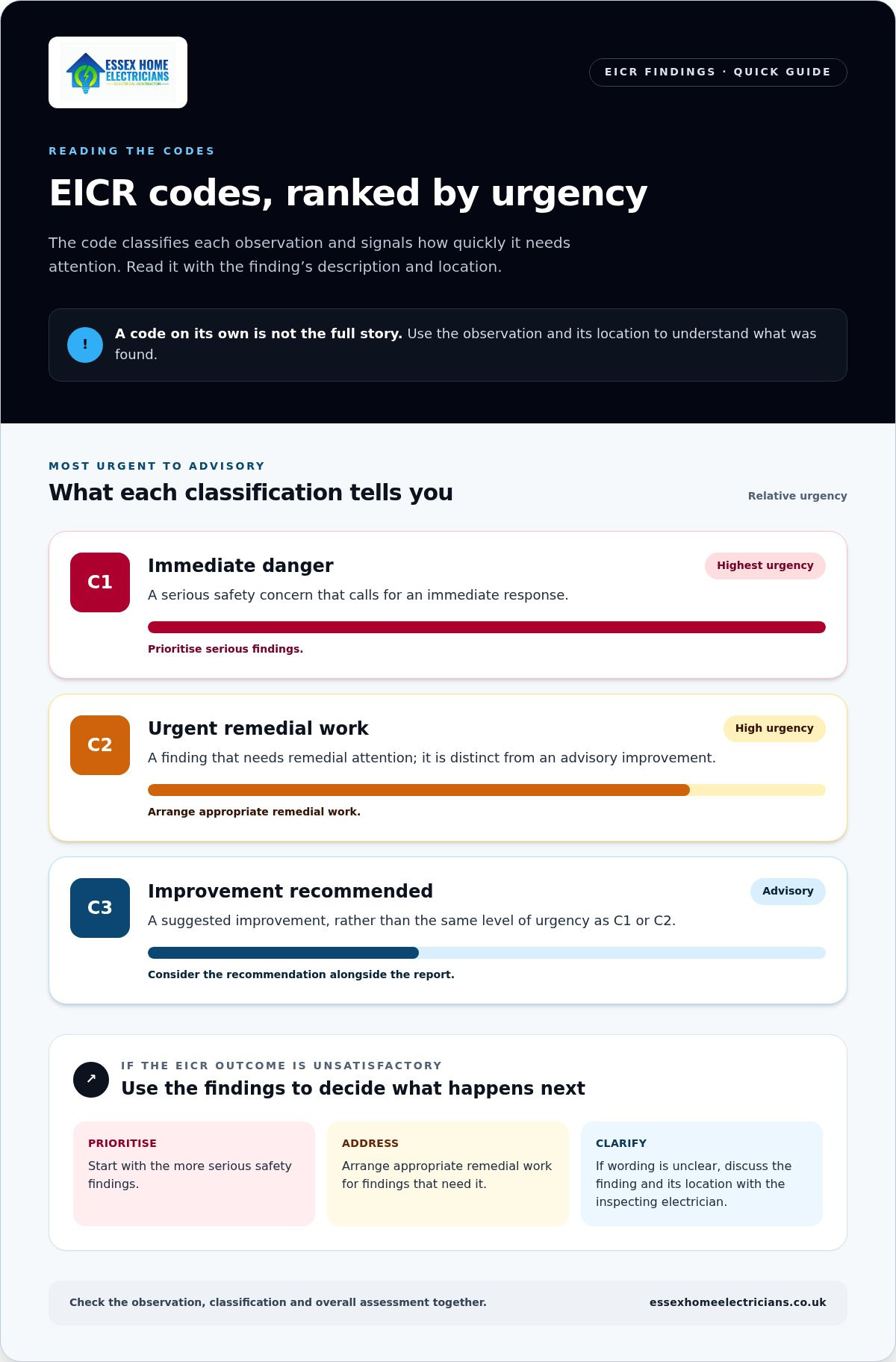
The codes on an EICR show how the electrician has classified each observation and how quickly it needs attention. Read a code alongside the finding’s description and location. A code on its own won’t tell you exactly what work is needed, but it signals the level of concern.
What do C1, C2, C3 and FI mean?
These definitions follow the classifications explained in UK government guidance on electrical safety. C1 and C2 indicate safety concerns. FI means the inspection hasn’t established enough to reach a clear conclusion about the issue. It isn’t the same as a confirmed defect, but it shouldn’t be ignored.
A C3 recommends an improvement; C1, C2 or FI indicates a more serious concern that needs appropriate follow-up. Don’t treat every observation as an immediate danger. The code, written explanation and location together provide the necessary context.
What does a satisfactory or unsatisfactory result tell you?
The overall assessment reflects the findings recorded in the report and the criteria used to evaluate them. An EICR is generally marked unsatisfactory if it includes a C1, C2 or FI code. A C3 alone doesn’t make the result unsatisfactory, although the suggested improvement may still be worth considering.
An unsatisfactory result means the identified issue needs suitable follow-up, such as remedial work or further investigation. Focus first on the most serious code and the electrician’s description, ensuring that repairs or upgrades are handled by qualified professionals—much like the specialised electrical services delivered by Banner Power across residential and commercial installations. A satisfactory result is a positive assessment of the installation at the time of inspection and within its stated scope. It isn’t a guarantee that the electrics will remain safe indefinitely or that a new fault can’t develop.
What should you do after receiving an electrical test certificate?
Use the report as a practical action plan, not just a pass-or-fail result. The right response depends on the observations and their codes. Work through these steps:
Read the overall outcome. Note whether the report is satisfactory or unsatisfactory, then check the inspection date and any stated limitations.
Find each observation and code. Read the full description and location, not just the code. This helps you understand what the electrician found and where.
Prioritise the follow-up. Take C1 and C2 findings seriously and follow the electrician’s advice on making the installation safe and arranging remedial work. If the report records FI, arrange the further investigation it recommends.
Keep a clear record. Save the report and paperwork for any completed work. This provides a useful history of the installation for future maintenance, inspections or property decisions.
What if the report is unsatisfactory?
When should you seek a professional explanation?
Get plain-English clarification if a description, recommendation or limitation isn’t clear. You should understand what was found, why it matters and what action is advised. If the report records an immediate safety concern, take it seriously and follow the electrician’s instructions. Don’t try to diagnose the issue from a cropped report or photograph. The finding needs to be understood in the context of the installation and inspection.
Essex Home Electricians provides EICR inspections and electrical follow-up in Essex. Information about our service is available through the EICR contact page.
Electrical test certificates in Essex: arrange a clear, professional EICR
A professional EICR gives you a structured assessment of an existing electrical installation. The report records inspection findings and issues that may need attention, helping homeowners, landlords and property managers understand the installation’s condition and plan sensible next steps.
What to expect from an EICR inspection
A qualified electrician inspects and tests the electrical installation within the inspection’s scope. The report records observations and the assessment, giving the property owner or manager a written account of what was found. It’s a practical way to understand the installation’s condition at the time of inspection.
Access can affect what the electrician is able to inspect and test. If parts of the installation can’t be accessed or checked, the report may note this as a limitation. Making relevant areas accessible can help the inspection provide a useful assessment.
Arrange an electrical inspection in Essex
Essex Home Electricians is a Basildon-based, NAPIT-accredited electrical contractor with over 20 years of experience. Our qualified, fully insured electricians provide EICRs across Essex, including Basildon, Benfleet, Canvey Island, Rayleigh, Wickford, Billericay, Leigh-on-Sea and Southend. The report records the installation’s condition and helps you understand any findings.
Our Essex EICR inspection guide provides more local information. Keep your report with the property’s records so its findings are available for future maintenance, electrical work or another inspection.
To arrange an EICR or discuss an electrical test certificate, contact Essex Home Electricians.
Turn your report into a clear next step
An electrical test certificate is most useful when you understand what it records and how to respond. Check the report’s scope and observations, then use the codes to distinguish urgent concerns from recommended improvements. If it’s unsatisfactory, follow the report’s advice on remedial work or further investigation, and keep records of what’s completed.
A clear explanation can make technical findings easier to act on. Essex Home Electricians is a NAPIT-accredited electrical contractor based in Basildon, with over 20 years of electrical experience. Our qualified, fully insured electricians serve homes across Essex.
Essex Home Electricians provides EICRs and can explain the findings in your report. With the right information and a sensible plan, you can take the next step with greater confidence.
Frequently Asked Questions
What does an electrical test certificate check?
An EICR records the condition of the fixed electrical installation within the inspection’s stated scope. The electrician inspects and tests relevant parts, which may include wiring, the consumer unit, earthing and other fixed electrical components. The report notes observations, test results and limitations, such as areas that couldn’t be accessed or fully checked. It assesses the installation at the time of inspection, not the condition of appliances or faults that may arise later—portable items are typically covered by separate safety procedures, such as the routine test and tag melbourne services used to inspect workplace equipment.
What do C1, C2, C3 and FI mean on an EICR?
C1 means danger is present and immediate action is needed to make the situation safe. C2 indicates a potentially dangerous condition requiring urgent remedial action. C3 recommends an improvement but doesn’t, by itself, make the report unsatisfactory. FI means further investigation is needed to establish the nature or extent of a concern. Read each code alongside its written observation. An EICR with C1, C2 or FI findings is generally assessed as unsatisfactory.
What happens if an electrical test certificate is unsatisfactory?
How long is an electrical test certificate valid for?
There isn’t one validity period that applies to every property or purpose. In England, landlords in the private rented sector must have the electrical installation inspected and tested at least every five years. For an owner-occupied home, an inspection every ten years is recommended. The report’s date and any applicable requirements matter, and changes to the property or concerns about its electrics may affect when another inspection is sensible.
Can I carry out an electrical test and issue a certificate myself?
A formal EICR should be carried out by a qualified person with the knowledge and equipment to inspect and test the installation, assess the results and record findings correctly. It isn’t simply a visual check or a document a property owner can complete without the required competence. If electrical work has been completed, the relevant certification depends on the type of work. An EICR assesses an existing installation; it isn’t interchangeable with a certificate for new work.
How much does an electrical test certificate cost?
The cost of an EICR depends on the property and the inspection required, so there isn’t one price that applies to every home. Factors can include the size and complexity of the installation, the number of circuits and whether access limitations affect the inspection. Essex Home Electricians provides electrical inspection services in Basildon, Benfleet, Canvey Island, Rayleigh, Wickford, Billericay, Leigh-on-Sea and Southend. Property details help define the inspection work involved.