

What if an “unsatisfactory” EICR is a clear action plan, not a reason to panic? With EICR testing Basildon homeowners and landlords can get a practical picture of their property’s electrical safety. It’s understandable to wonder what the electrician will inspect and whether the power needs to be switched off.
You deserve to know what to expect before the visit and how to make sense of the findings afterwards. This guide explains what an Electrical Installation Condition Report checks, what falls outside its scope and how inspection observations are coded. That way, you can focus on the issues that need attention without treating every note as an emergency.
You’ll also find out when inspections are required or recommended, what may happen during testing and what to look for when choosing a local electrician. Essex Home Electricians is based in Basildon and has more than 20 years’ experience. Asking about an inspector’s qualifications, insurance and accreditation can help you arrange a suitable inspection with confidence.
Table of Contents
Choosing an EICR electrician and arranging testing in Basildon
EICR testing in Basildon: practical next steps after the report
What does EICR testing in Basildon check?
An EICR inspection assesses the condition of a property’s fixed electrical installation. The Electrical Installation Condition Report is the written record of the inspection’s findings. For a Basildon property owner, that distinction matters: the electrician carries out the assessment, then documents observations and an overall view of the installation’s condition.
The purpose is to identify concerns such as deterioration, damage, defects or other signs that the fixed installation may not be safe. An EICR isn’t an appliance test, and it doesn’t assess every plug-in item in the property. Nor can it guarantee that a fault won’t develop after the inspection. For general background on electrical installations and UK wiring regulations, see this technical overview.
Which parts of a Basildon property are inspected?
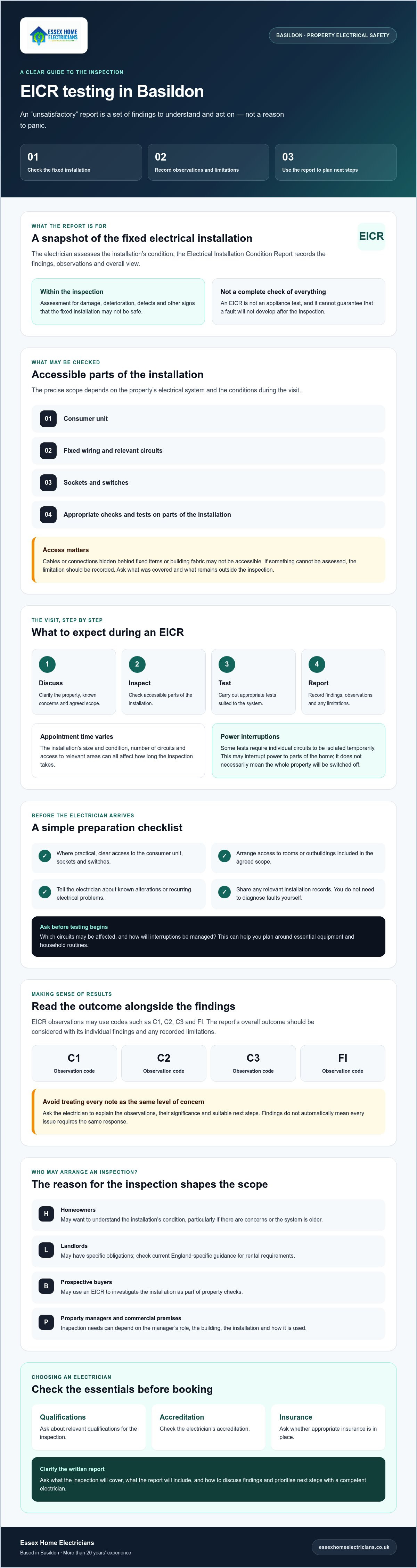
The electrician may examine the consumer unit, fixed wiring, sockets, switches and relevant circuits in accessible areas. They’ll also carry out appropriate checks and tests on parts of the installation. The precise scope depends on the property’s electrical system and the conditions during the visit.
Not every cable or connection is visible without lifting floors, moving fixed items or opening building fabric. If an area can’t be accessed or a part of the installation can’t be assessed, that limitation should be recorded in the report. Don’t assume an inaccessible section has been tested. Ask what was covered and what remains outside the inspection.
Who may need an EICR in Basildon?
Homeowners may arrange an inspection to understand the condition of their installation, particularly if they have concerns or want a clearer picture of an older system. Landlords may have specific obligations, while prospective buyers can use an EICR to investigate the installation as part of their property checks. Property managers may arrange inspections on behalf of owners, depending on their role and the property.
These situations don’t automatically carry the same duties. For commercial premises, inspection needs can also vary according to the building, its electrical installation and how it’s used. Landlords looking for details about rental requirements should consult the separate landlord EICR guide and check current England-specific guidance. EICR testing Basildon should start with the property’s purpose and the reason for the inspection, so the agreed scope is clear before work begins.
How an EICR inspection works in a Basildon home
An EICR inspection usually involves discussing the property and agreed scope, checking accessible parts of the installation, carrying out appropriate tests, then recording the findings in a report. Knowing the steps can make EICR testing Basildon feel more straightforward and help you prepare for the electrician’s visit.
The electrician will first clarify details such as the type of property, any known electrical concerns and which areas are included. They’ll then inspect accessible parts of the installation and perform tests suited to the system. The results, including any observations or limitations, are documented for you to review.
There isn’t one set appointment length for every home. The size and condition of the installation, the number of circuits and how easily the electrician can access relevant areas can all affect the time needed. Ask what scope has been agreed and whether the electrician needs any information from you beforehand.
What should you prepare before the electrician arrives?
A little preparation can help the inspection proceed smoothly. Where practical, clear access to the consumer unit, sockets and switches, and arrange access to rooms or outbuildings included in the agreed scope. Tell the electrician about known alterations, recurring electrical problems or relevant installation records. You don’t need to diagnose faults yourself; simply share what you’ve noticed.
What happens to the power during EICR testing?
Some tests require individual circuits to be isolated temporarily, which can interrupt the supply to parts of the home. That doesn’t mean every inspection involves switching off power throughout the whole property. Before testing begins, ask which circuits may be affected and how interruptions will be managed. This gives you time to plan around essential equipment or household routines.
If the property is rented, landlords should check the official Electrical Safety Standards in the Private Rented Sector (England) Regulations 2020 guidance for information about their responsibilities. The practical inspection sequence is separate from those legal duties, and the appropriate arrangements depend on the property and inspection scope.
Before confirming a booking, make sure you understand which areas are included and what access is needed. If you’re arranging an inspection in Basildon, you can ask about booking an EICR and discuss the property’s inspection requirements.
Understanding EICR results without jumping to conclusions
An EICR records observations about the fixed electrical installation and gives an overall assessment based on the inspection. It isn’t a simple product-style pass mark, and an unsatisfactory outcome doesn’t automatically mean the property needs a full rewire. The individual observations explain what was found and help determine the appropriate next step.
What do C1, C2, C3 and FI mean?
The codes describe the nature of an observation. C1 and C2 indicate safety concerns requiring appropriate action; C3 recommends an improvement, while FI means further investigation is needed. Read each code alongside the electrician’s description and advice, rather than relying on the letter alone.
Where C1, C2 or FI observations are recorded, the overall result is generally unsatisfactory until the relevant concern has been dealt with or investigated. Don’t dismiss these findings, but don’t guess at their meaning either. Ask the inspecting electrician to explain the risk, the recommended action and any timescale they advise. Landlords can also consult the NRLA’s guidance for landlords on electrical safety for practical information relevant to rental properties.
Does an unsatisfactory EICR mean the property needs rewiring?
No. The right response depends on what was found, where it is and how it affects the installation. A specific defect may call for targeted remedial work, while wider or more serious findings could lead to recommendations for more extensive work. A full or partial rewire is not an automatic consequence of an unsatisfactory report.
For example, an observation affecting one circuit should be considered in relation to that circuit and the electrician’s recorded findings. Ask which parts need attention, why, and whether further investigation is needed before deciding on work. Keep the inspection findings separate from any quote for remedial work, and make sure you understand the proposed scope before agreeing to it.
For EICR testing Basildon, the report is most useful when every observation is clear to you. For more detail on reading codes, see the separate article on understanding an electrical test certificate.
Choosing an EICR electrician and arranging testing in Basildon
A dependable inspection starts with a clear conversation about the property and what the report will cover. Before booking EICR testing Basildon, check the electrician’s relevant qualifications, accreditation and insurance. Ask who will carry out the inspection and what written report you’ll receive.
What should a clear EICR service include?
The scope should match the property and the reason for the inspection. A clear quote or booking confirmation should identify the property, the agreed inspection scope and any known limitations, such as areas that may not be accessible. Check that the service includes a formal report recording observations and the overall assessment, with an explanation of any recommended follow-up.
Competence: Ask about the inspector’s relevant qualifications and experience.
Accreditation and insurance: Check the details and confirm they’re current.
Scope and limitations: Find out which areas are included and how anything not inspected will be recorded.
Reporting: Make sure you’ll receive a written report and can ask questions about its findings.
Inspection findings and remedial work are separate decisions. If the report identifies concerns, ask the electrician to explain each observation and the recommended next step. You can then consider any proposed work in light of the findings, rather than assuming it’s automatically included in the inspection.
How do you arrange EICR testing in Basildon?
When you enquire, share the property type and location, why you need the inspection, and any known issues or access restrictions. Mention whether the property is occupied and whether you have previous electrical records. This helps the provider understand your request and clarify the proposed scope before quoting.
Essex Home Electricians is based in Basildon and its stated service area includes nearby Essex towns. The service area includes Basildon, Benfleet, Canvey Island, Rayleigh, Wickford, Billericay, Leigh-on-Sea and Southend. Ask whether your address can be covered and what appointment availability applies; don’t assume a particular date until it’s confirmed. The company’s electricians are described as qualified and insured, and the business as NAPIT-accredited. Confirm its current accreditation status when making enquiries.
For an overview of the company’s local electrical services, visit Essex Home Electricians’ services. If you’re ready to discuss a property’s inspection scope, enquire about arranging an EICR.
EICR testing in Basildon: practical next steps after the report
Once the report arrives, use it to understand what was observed and what needs follow-up. The overall assessment matters, but so do the individual findings, any limitations and any recommendation for further investigation. If the wording isn’t clear, ask the inspecting electrician to explain the issue, the possible risk and the action they recommend.
What should you do after receiving an EICR?
Read the report carefully rather than relying on a single outcome label. Make a note of any observations you want explained, and check whether the electrician recorded areas they couldn’t access or aspects that need more investigation.
Clarify priorities: Ask which observations need attention first and why.
Understand the scope: Check what was inspected and whether any limitations affect the findings.
Keep a record: Store the report with other property documents and share it with relevant owners, landlords or property managers.
The right response depends on the specific finding and the property’s circumstances. If you’re a landlord or managing a property, check any obligations that apply to that property rather than assuming the same timetable or process fits every situation. An EICR is a planned inspection, not a substitute for urgent help if you suspect immediate electrical danger. Keep people away from the suspected hazard and seek prompt advice from a competent electrician.
When should you arrange a follow-up inspection or remedial work?
Use the report’s recommendations and any applicable property-specific requirements to decide what happens next. There’s no single follow-up timetable that suits every observation. Ask the electrician what action is advised, whether further investigation is needed and how the work will address the recorded issue.
Remedial work should relate to the defects or concerns identified, rather than being treated as an automatic part of every inspection. Before agreeing to work, make sure its proposed scope is clear. Keep records of completed work and any related documentation, so the property file shows how the reported findings were addressed.
If you’re in Basildon and want to discuss an EICR or findings that need follow-up, Essex Home Electricians offers free, no-obligation quotes. Request a quote for EICR testing and share the relevant details from your report.
Take the next step with confidence
A useful EICR gives you a clearer understanding of the fixed electrical installation and a practical basis for deciding what needs attention. Read the observations alongside the overall assessment, and ask the inspecting electrician to explain any recommended action. An unsatisfactory result doesn’t automatically mean extensive work is needed; the right response depends on the recorded findings.
For EICR testing Basildon, choosing a local contractor who explains the inspection and report can make the process easier to manage. Essex Home Electricians is based in Basildon and has more than 20 years of experience. Its stated credentials include NAPIT accreditation and qualified, insured electricians. Confirm current accreditation and insurance details when enquiring. Free, no-obligation quotes are available.
If you’re ready to discuss an inspection for your property, contact Essex Home Electricians to request a free, no-obligation quote for EICR testing. Share your property details and any concerns or report findings you’d like to discuss.
Frequently Asked Questions
What does an EICR test check in a Basildon property?
An EICR checks the condition and safety of a property’s fixed electrical installation. The electrician assesses accessible parts such as the consumer unit, fixed wiring, sockets, switches and relevant circuits, then records observations and an overall assessment. It isn’t a test of plug-in appliances, and it can’t guarantee that faults won’t develop later. The inspection scope and any areas that couldn’t be accessed should be clear in the report.
How long does EICR testing take in a typical home?
There isn’t one reliable duration for every home. The time needed depends on factors such as the property’s size, the number and layout of circuits, the installation’s condition and how easily relevant areas can be accessed. A compact flat and a larger house may need different inspection times. When arranging EICR testing in Basildon, describe the property and ask the electrician how long to allow for the agreed inspection.
Will the electricity be switched off during an EICR inspection?
Some tests require circuits to be temporarily isolated, which may interrupt power to parts of the home. That doesn’t mean every inspection involves switching off electricity throughout the property. Ask the electrician beforehand which circuits may be affected and how interruptions will be handled. If anyone at home relies on electrical equipment, mention this before testing so you can discuss practical arrangements with the inspector.
What happens if an EICR is unsatisfactory?
An unsatisfactory report means the recorded findings need attention or further investigation, not that you should guess at the remedy. Read each observation and ask the inspecting electrician to explain the risk, recommended action and priority. C1 and C2 observations require appropriate action; FI means further investigation is needed. Agree next steps based on the report, and keep records of any follow-up work and related documentation.
Does an unsatisfactory EICR mean I need a full rewire?
No. An unsatisfactory EICR doesn’t automatically mean a full rewire is needed. The appropriate response depends on the specific defects, their location and the condition of the wider installation. Some findings may call for targeted work or further investigation; more extensive recommendations depend on what the electrician identifies. Ask for each observation and proposed remedy to be explained clearly, and review any work separately from the original inspection.
How often should a home have an EICR?
For owner-occupied homes, an EICR is commonly recommended around every ten years, though this isn’t a legal requirement for homeowners. It may also be sensible to arrange an inspection when buying a property or if you have concerns about the installation. The right timing depends on the home and its electrical system, so ask a competent electrician for advice rather than treating ten years as a fixed rule.
Is an EICR legally required for landlords in England?
Yes. Landlords of privately rented properties in England must arrange inspection and testing of the fixed electrical installation at least every five years, or sooner if the report specifies a shorter interval. They must also provide tenants with a copy of the report as required by the regulations. Check current official guidance for the duties that apply to your property. Requirements can differ elsewhere in the UK.