
An old consumer unit isn’t automatically unsafe, and a newer one isn’t automatically suitable. If you’re asking, “do I need a new consumer unit?”, its age alone won’t give you the answer. Rewireable fuses, no RCD protection, frequent tripping or visible damage can all be reasons to arrange an assessment. Scorch marks or a burning smell need prompt attention.
It’s understandable to worry about safety, disruption or being advised to replace a unit that still works. A professional inspection looks at the consumer unit, its protective devices and the wider electrical installation. An Electrical Installation Condition Report (EICR) can help show whether the right next step is further investigation, remedial work or replacement.
This guide explains the warning signs, what an electrician assesses and how inspection findings inform the decision. You’ll also learn what to do next in Essex. Essex Home Electricians is a NAPIT-accredited local contractor with over 20 years of experience, providing fuse box repairs and upgrades and EICR inspections for homeowners across the county.
Table of Contents
Do I need a new consumer unit? Start with these warning signs
When should you replace a consumer unit, and when might you not?
Consumer unit advice and replacement support from Essex Home Electricians
Do I need a new consumer unit? Start with these warning signs
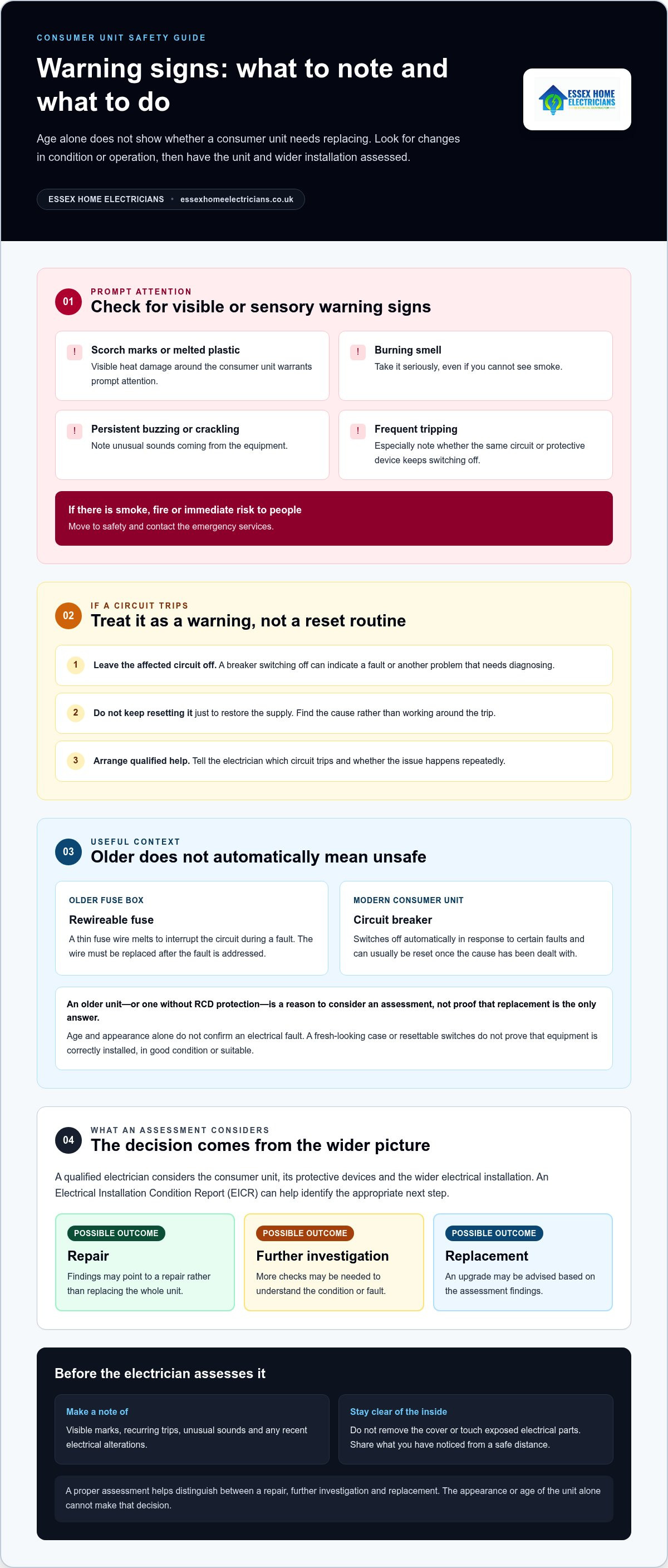
Age alone doesn’t establish that a consumer unit needs replacing. If you’re asking, “do I need a new consumer unit?”, look for signs of damage or unreliable operation, then have the unit and wider installation assessed. An old-looking fuse box may need testing, but its appearance doesn’t prove there’s a fault or mean replacement is the only answer.
Take these warning signs seriously:
Scorch marks, melted plastic or visible heat damage around the unit.
A burning smell near the consumer unit, even if you can’t see smoke.
Unusual buzzing, crackling or other persistent sounds coming from the equipment.
Frequent tripping, especially if the same circuit or protective device keeps switching off.
Frequent tripping needs investigation. A circuit breaker switching off can indicate a fault or another problem that needs diagnosing. Don’t keep resetting it to restore the supply. Leave the affected circuit off and arrange qualified help. A trip is a warning to find the cause, not something to work around.
Which consumer unit warning signs need prompt attention?
Heat damage, scorch marks, a burning smell and unusual sounds all warrant prompt attention. Keep clear of damaged equipment, and don’t remove the cover or touch exposed electrical parts. Contact a qualified electrician to assess the problem. If there’s smoke, fire or an immediate risk to people, move to safety and contact the emergency services.
Don’t try to investigate inside the unit yourself, even if the marks or sound seem minor. Electrical parts can remain dangerous, and removing a cover may expose live components. If you notice a warning sign, describe what you’ve seen or heard when arranging help. That information can help the electrician understand the concern before assessing the installation.
Does an old fuse box automatically need replacing?
No. Age and appearance alone don’t confirm an electrical fault. Older units may use rewireable fuses, where a fuse wire melts to interrupt the circuit during a fault. Modern circuit breakers switch off when they detect certain faults and can be reset once the cause has been addressed. That difference is useful context, but it doesn’t tell you on its own whether the whole unit must be replaced.
An older fuse box, or one without RCD protection, is a reason to consider a professional assessment, not proof that replacement is the only solution. An electrician can consider the unit’s condition, the protective devices fitted and the results of appropriate tests on the wider installation. Depending on those findings, the next step might be a repair, further investigation or an upgrade.
Never open the consumer unit to check its fuses or devices. Note any visible signs, trips or unusual sounds from a safe distance, and share that history with the electrician. A proper assessment gives you a clearer basis for deciding what work, if any, is needed.
What a modern consumer unit does to protect your home
A consumer unit is the central distribution point for your home’s electrical circuits. It takes electricity from the supply and distributes it to circuits for lighting, sockets and other equipment. It also houses protective devices that can disconnect a circuit if they detect certain faults. If you’re wondering “do I need a new consumer unit?”, understanding these protections helps, but the unit’s appearance alone can’t confirm that they’re present, working or suitable.
Consumer unit or fuse box: what is the difference?
Both terms describe equipment that distributes electricity around a home and provides circuit protection. Older fuse boxes commonly use rewireable fuses: a thin fuse wire melts if the circuit draws too much current, and the wire must be replaced after the fault is addressed. Modern circuit breakers switch off automatically in response to certain faults. They can usually be reset once the cause has been dealt with. Neither a fresh-looking case nor resettable switches prove that equipment is correctly installed or in good condition.
What do RCDs, RCBOs and surge protection do?
These devices have different roles. A circuit breaker helps protect a circuit from faults such as an overload. An RCD monitors the flow of electricity and disconnects the supply if it detects an imbalance, which can reduce the risk of electric shock in relevant circumstances. An RCBO combines circuit-breaker and RCD protection for a circuit. A surge protection device, or SPD, helps protect the installation and connected equipment from certain sudden voltage surges. It doesn’t prevent every electrical fault or replace other protective devices.
Current UK wiring requirements call for 30mA RCD protection on almost all domestic circuits, with Type A RCDs the minimum for new circuits. Surge protection is also a standard expectation for a new consumer unit installation. The appropriate arrangement depends on the installation and applicable requirements, so these points aren’t a reason to choose a unit yourself. An electrician can assess the wiring, protective devices and the work being carried out. The IET’s Modern Consumer Unit Safety Features guide explains how consumer units can help address risks including electric shock, fire and surges.
Protection is a system, not just a box. Even a modern unit may not provide suitable protection if it’s damaged, incorrectly installed or poorly matched to the circuits it serves. An older unit’s age alone doesn’t tell you how its circuits perform. A qualified assessment connects the devices in the board with the condition and test results for the wider installation.
If you’re unsure what your existing unit provides, an electrician can explain the findings and whether repair, further investigation or an upgrade is appropriate. Arrange an electrical assessment in Essex to get clear, installation-specific advice.
When should you replace a consumer unit, and when might you not?
So, do I need a new consumer unit? The answer depends on evidence, not a single feature or assumption. An electrician should assess the consumer unit alongside the wider installation before recommending replacement. The condition of connections, the protection provided and relevant test results all matter. Depending on the findings, the appropriate next step could be a repair, further investigation or a new unit.
These options show how common findings might be addressed. They aren’t a diagnosis: one symptom or observation can have different causes, and an electrician needs to interpret it in context.
Possible next step
Repair: The issue may be confined to a component or connection, and the electrician finds that a suitable repair can address it safely.
Further investigation: A test or observation raises a concern, but more checks are needed to understand its cause or extent.
Replacement: The unit’s condition, protective arrangements or suitability for the installation may support changing it. The wider wiring may also need remedial work.
What can an EICR tell you about your consumer unit?
An Electrical Installation Condition Report (EICR) records the observed condition of the electrical installation at the time of inspection. It isn’t just a visual check of the consumer unit. The electrician assesses relevant parts of the installation, including circuits and protective measures, and records observations that may call for action. The report helps explain what was found and what remedial work may be appropriate. It doesn’t automatically mean the consumer unit must be replaced.
Read any recommendations alongside the explanation of the finding. A concern associated with the board might relate to its condition, a protective device or a connection. The electrician can explain whether the issue is limited to the unit or involves other parts of the installation, and whether further investigation is needed before agreeing work.
Can you keep the existing unit if it still works?
Normal operation doesn’t prove that every safety measure is adequate. A unit may continue supplying power while an inspection identifies concerns that aren’t obvious in everyday use. On the other hand, an older unit or a particular enclosure material alone isn’t a complete verdict. A metal case or newer model doesn’t guarantee that the equipment is correctly installed, suitable for the circuits or in sound condition.
An electrician may find that a repair or other remedial work is appropriate, or may recommend replacement based on the combined findings. The decision should account for the condition of connections, the protective devices fitted, the test results and any effect on the wider installation. Don’t treat a single feature, such as the unit’s age or case, as proof for or against replacement.
Ask for the findings and recommended next steps to be explained in plain language. That makes it easier to understand why work is proposed, what it addresses and whether further checks are needed before proceeding.
How to get your consumer unit assessed safely in Essex
A clear assessment helps answer the practical question: do I need a new consumer unit, or is another step more appropriate? The process should start with what you’ve noticed, then move through an inspection, an explanation of the findings and agreed next steps. You don’t need to diagnose the problem yourself.
Note the symptoms. Write down what happens, when it happens and which circuits are affected. Record repeated trips, unusual sounds or smells, visible damage and any changes in how the electrics behave.
Arrange a qualified assessment. Explain your concerns and mention any recent electrical alterations, additions or known faults. This history can help the electrician focus the inspection.
Review the findings. Ask what was inspected and tested, what the results show and whether anything needs attention. A recommendation should relate to the condition of the installation and applicable requirements.
Agree the next step. The findings may point to repair, further investigation or replacement. Make sure you understand the reason for the proposed work before deciding how to proceed.
What should you expect during a professional assessment?
The electrician will inspect the visible condition of the consumer unit and assess relevant protective measures. Depending on the concern, the assessment may also involve testing the unit and related circuits to gather evidence about the installation’s condition. If a broader review is appropriate, an Electrical Installation Condition Report (EICR) records observations about the wider installation, not just the board. Recommendations should follow the findings, rather than assume replacement is always needed.
Essex Home Electricians provides EICR inspections for homeowners across Essex. For a broader overview of electrical safety checks, see this EICR safety guide. An EICR can help clarify the condition of the installation and identify observations that may need remedial work or further investigation.
When might the consumer unit be part of wider electrical work?
A fault or planned alteration can raise questions beyond the consumer unit. For example, adding a new circuit or investigating a recurring issue may mean the electrician needs to consider the wiring and protective measures serving that circuit. When planning dedicated property upgrades such as residential camera systems, professional installers like JK Canning Electrical emphasize evaluating consumer-unit capacity and circuit safety before proceeding. The extent of any work depends on the inspection and test results. An older installation doesn’t automatically require a full rewire; the wiring’s actual condition matters. If the assessment raises wider questions about it, this Essex house rewiring guide offers further context.
Share what you know, then let the electrician explain what the evidence means for your home. Essex Home Electricians is based in Basildon and serves homeowners across Essex, including Benfleet, Canvey Island, Rayleigh, Wickford, Billericay, Leigh-on-Sea and Southend. Arrange an assessment for your consumer unit and discuss the findings and suitable next steps.
Consumer unit advice and replacement support from Essex Home Electricians
If you’re still asking, “do I need a new consumer unit?”, an assessment can help you get an answer based on your home rather than assumptions. Essex Home Electricians is a Basildon-based, NAPIT-accredited electrical contractor with over 20 years of experience. The team carries out consumer-unit upgrades, fuse-box repairs and Electrical Installation Condition Report (EICR) inspections for homeowners across Essex.
A recommendation should follow the evidence. An electrician considers the unit’s condition and the assessment findings before advising whether a repair, further investigation or replacement is appropriate. A working fuse box isn’t automatically fit for every installation, but age alone doesn’t mean it must be replaced. The aim is to understand what your property needs and why.
Local consumer-unit support across Essex
Based in Basildon, Essex Home Electricians serves homeowners in areas including Benfleet, Canvey Island, Rayleigh, Wickford, Billericay, Leigh-on-Sea and Southend, as well as other parts of the county. If you’re exploring what an upgrade involves, the Basildon fuse-box upgrade guide gives further context on consumer-unit safety. An electrician can relate that general information to the condition and requirements of your own installation.
Whether you’re concerned about an older fuse box or want to understand an inspection recommendation, sharing the details helps make the conversation more useful. You don’t need to work out the cause yourself. A qualified electrician can explain the available options in light of the assessment findings.
What to share when arranging an assessment
Before arranging an assessment, note what you’ve observed and any relevant history. For example, mention repeated trips, unusual smells, visible damage or electrical changes carried out in the property. If you have a previous EICR or other inspection report, have it available. These details give the electrician helpful context, but they don’t replace an inspection or determine the outcome in advance.
Essex Home Electricians can discuss your concerns and, where relevant, provide a no-obligation quote for the recommended work. You can talk through the assessment findings and understand what the proposed work is intended to address before deciding how to proceed. The advice remains specific to your property, not a blanket recommendation to replace every older unit.
For locally focused support with consumer-unit upgrades, fuse-box repairs or an EICR, contact the Essex team for advice.
Take the next step with confidence
If you’re still weighing up “do I need a new consumer unit?”, focus on getting a clear, property-specific answer before making plans. A considered recommendation can help you understand the options and decide what to address, rather than feeling pressured into work based on age or appearance alone.
Keep any inspection findings and recommendations together, so you can refer back to what was observed and why a particular next step was proposed. If anything is unclear, ask for the explanation in plain language. You should feel comfortable understanding the reasons for the work before agreeing how to proceed.
Essex Home Electricians can discuss your concerns and the appropriate assessment or work for your home. Contact the Essex team to discuss your consumer unit and take a practical next step towards a safer, better-understood installation.
Frequently Asked Questions
Can I replace a consumer unit without rewiring the whole house?
Yes, a consumer unit can sometimes be replaced without rewiring the whole house. The electrician needs to assess the existing circuits and wiring first, as the condition of the installation may affect what work is suitable. A problem on one circuit, for example, doesn’t automatically mean every cable in the property needs replacing. If the assessment identifies wider wiring issues, remedial work or partial rewiring may also be recommended.
Is a metal consumer unit always required in a UK home?
No, not every existing home must automatically have its consumer unit replaced with a metal one. For new domestic installations, the enclosure must be non-combustible, which in practice means metal. An older plastic unit isn’t, on its own, proof that the installation is unsafe or that immediate replacement is required. A qualified electrician needs to consider the unit’s condition and the work being carried out.
Do I need a new consumer unit to install an EV charger?
Not automatically. Before installing an EV charger, an electrician needs to assess whether the existing electrical installation and protective arrangements are suitable for the proposed charger. The consumer unit may be suitable, may need an alteration or may need upgrading, depending on the findings and installation requirements. Don’t assume the charger can simply be connected to an existing circuit; the assessment should account for the whole relevant installation.
What does a C2 code on an EICR mean for my consumer unit?
A C2 observation on an Electrical Installation Condition Report means the electrician has identified a potentially dangerous condition requiring urgent remedial action. It doesn’t automatically mean the consumer unit itself must be replaced. Check the report to see which observation received the code, as it may relate to another part of the installation. Arrange for the issue to be addressed promptly by a qualified electrician, and ask them to explain the recommended work.
Can a faulty consumer unit cause circuit breakers to keep tripping?
Yes, a fault in the consumer unit could contribute to repeated tripping, but it isn’t the only possible cause. The problem may also be on a circuit, with connected equipment or due to an overload. For example, if a breaker trips when a particular appliance is used, tell the electrician what was running at the time. Don’t repeatedly reset a breaker that keeps tripping. Leave the affected circuit off and arrange an assessment.
How long will my electricity be off when a consumer unit is replaced?
There isn’t one fixed outage time for every replacement. The supply has to be isolated for the work, and the overall interruption depends on the installation, the condition of existing wiring and the checks required afterwards. Ask the electrician for an estimate based on your property before arranging the work. Plan around essential electrical equipment, and make alternative arrangements for anything you rely on during the interruption.
Can a tenant request a consumer-unit inspection?
Yes. A tenant can report a concern and ask the landlord or managing agent to arrange an inspection, particularly if there are signs of damage, repeated trips or an electrical safety concern. In England, private landlords must arrange an EICR at least every five years. Share any previous report or details of the problem, and don’t remove the consumer-unit cover or attempt repairs yourself.